
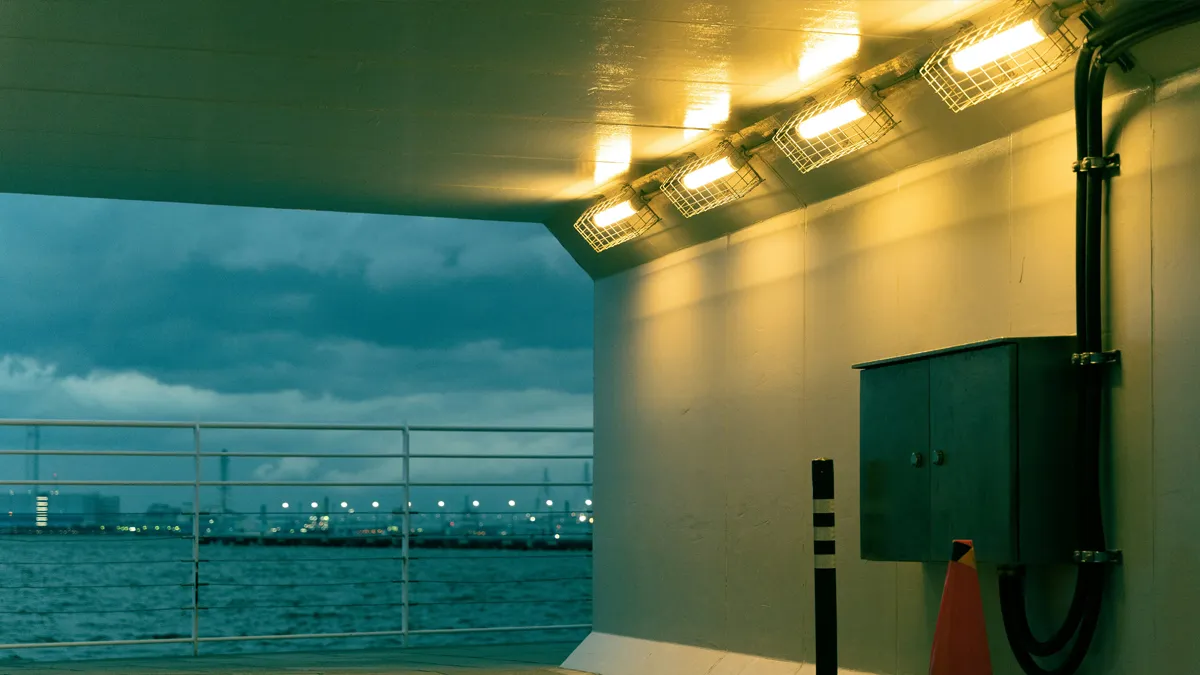
When a single spark can trigger a catastrophe, lighting isn’t just about visibility — it’s about survival. Oil refineries, chemical processing plants, grain silos, offshore platforms, and pharmaceutical solvent areas all share one thing: the air contains flammable gases, vapors, or combustible dust that ordinary lighting fixtures could ignite. This guide walks you through everything a facility manager, EHS director, or specifier needs to know about explosion-proof LED lighting in 2026 — from understanding hazardous area classification to selecting fixtures that keep both workers and production lines safe.
1. What “Explosion-Proof” Actually Means (and What It Doesn’t)
The term “explosion-proof” is widely misunderstood. It does nicht mean the fixture can survive an external explosion. It means the fixture is designed to contain any internal explosion and prevent it from escaping to ignite the surrounding atmosphere.
There are two fundamental protection concepts used in hazardous location LED fixtures:
- Flameproof (Ex d) — The enclosure withstands internal explosion pressure and quenches escaping hot gases through precision-machined flame paths. This is the traditional “explosion-proof” approach used globally.
- Erhöhte Sicherheit (Ex e) — The fixture eliminates ignition sources entirely. No arcing, no sparking, no hot surfaces exceeding temperature classification limits. Increasingly popular for LED fixtures where the solid-state light source itself has no ignition risk.
Modern explosion-proof LED luminaires often combine both approaches: an Ex e housing with Ex d terminal compartments, giving you the best of both worlds — safety without the weight and cost penalty of fully flameproof designs.
2. Hazardous Area Classification: Zones, Classes, and Divisions
Before you can specify a fixture, you must know what hazardous classification your facility falls under. Two major systems govern this globally:
2.1 IEC Zone System (Used in Europe, Asia, Middle East, and most of the world)
| Zone | Gas/Vapor Hazard Present | Duration |
|---|---|---|
| Zone 0 | Continuously present | >1,000 hours/year |
| Zone 1 | Likely under normal operation | 10–1,000 hours/year |
| Zone 2 | Not likely under normal operation | <10 hours/year |
| Zone | Combustible Dust Hazard Present | Duration |
|---|---|---|
| Zone 20 | Continuously present | >1,000 hours/year |
| Zone 21 | Likely under normal operation | 10–1,000 hours/year |
| Zone 22 | Not likely under normal operation | <10 hours/year |
2.2 North American Class/Division System (NEC Article 500 / CEC Section 18)
| Class | Hazard Type | Typical Location |
|---|---|---|
| Class I | Flammable gases/vapors | Refineries, chemical plants, paint booths |
| Class II | Combustible dust | Grain elevators, flour mills, coal plants |
| Class III | Ignitable fibers/flyings | Textile mills, woodworking facilities |
| Division | Meaning |
|---|---|
| Division 1 | Hazard present under normal operating conditions |
| Division 2 | Hazard present only under abnormal conditions (spill, leak, equipment failure) |
Key takeaway: A fixture rated for Class I, Division 1 (C1D1) covers the most demanding gas-hazard environments. Class I, Division 2 (C1D2) is appropriate for the majority of industrial plants where flammable materials are contained but could escape during an upset condition. Know which you need before you buy — specifying C1D1 where C1D2 would suffice adds 40–60% to your fixture cost with no safety benefit.
3. ATEX vs. IECEx vs. UL/CSA: The Certification Maze
If your facility operates in multiple regions or exports equipment, you need to understand how these certification schemes interact.
3.1 ATEX (EU Directive 2014/34/EU)
ATEX is mandatory for equipment sold or installed within the European Union. The marking follows this format:
II 2 G Ex db IIC T4 GbDecoded:
- II = Non-mining equipment
- 2 = Category 2 (suitable for Zone 1 / Zone 21)
- G = Gas atmosphere
- Ex db = Flameproof protection
- IIC = Gas group (hydrogen/acetylene — the most stringent)
- T4 = Temperature class (max surface temperature 135°C)
- Gb = Equipment Protection Level (EPL) for Zone 1
3.2 IECEx (International)
IECEx follows the same technical standards as ATEX (IEC 60079 series) but provides a globally recognized certificate. In 2026, most major projects in the Middle East, Southeast Asia, and Australia now require IECEx certification. The key advantage over ATEX: IECEx requires ongoing factory surveillance audits, while ATEX relies on initial type examination plus production quality assurance.
3.3 UL 844 / CSA C22.2 No. 137 (North America)
For U.S. and Canadian installations, fixtures must carry a UL or CSA listing specific to hazardous locations. A European ATEX certificate is nicht accepted by North American AHJs (Authorities Having Jurisdiction). Always verify the listing mark and the specific Class/Division the fixture covers.
Practical guidance: If you’re sourcing globally, look for manufacturers whose products carry all three — ATEX + IECEx + UL — on the same platform. This simplifies specification for multinational EPC projects and ensures consistent quality regardless of installation geography.
4. Temperature Classification: Why T-Rating Matters
Every hazardous location fixture carries a temperature classification (T-rating) that defines the maximum surface temperature the fixture can reach — even under fault conditions. Your facility’s gas or dust ignition temperature determines the minimum T-rating you need.
| T-Class | Max Surface Temperature | Example Substances Safe Below This |
|---|---|---|
| T1 | 450°C (842°F) | Hydrogen, methane, propane |
| T2 | 300°C (572°F) | Ethylene, butane, acetylene |
| T3 | 200°C (392°F) | Gasoline, diesel, jet fuel |
| T4 | 135°C (275°F) | Acetaldehyde, diethyl ether |
| T5 | 100°C (212°F) | Carbon disulfide (atmospheric) |
| T6 | 85°C (185°F) | Ethyl nitrite |
Here’s where LED technology provides a decisive advantage: LED fixtures generate far less heat than HID or fluorescent alternatives. Most quality explosion-proof LED fixtures achieve T4 or even T5/T6 ratings with zero design compromise, whereas traditional HID explosion-proof fixtures often max out at T3. This means LED gives you a wider safety margin — and in borderline cases, LED may be the only acceptable lighting technology.
5. Explosion-Proof LED Fixture Types and Their Applications
5.1 Explosion-Proof LED High Bay / Low Bay
The workhorse of hazardous area lighting. Available in 100W–300W configurations, typically replacing 250W–400W HID explosion-proof fixtures. Mounting heights range from 5m (low bay) to 20m+ (high bay). Wattages should be selected based on a photometric study considering mounting height, required lux levels, and any obstructions from pipe racks or structural steel.
5.2 Explosion-Proof LED Linear (Tube) Fixtures
Ideal for continuous-row lighting in walkways, stairwells, and control corridors within hazardous plants. Typically 18W–60W per unit with linking capability. Look for 304 or 316 stainless steel brackets in corrosive environments (offshore, coastal chemical plants).
5.3 Explosion-Proof LED Floodlights
For area lighting of tank farms, loading racks, and perimeter security in hazardous zones. 150W–400W LED equivalents that throw light 30m–60m. Critical features: adjustable mounting yoke, tempered glass lens with guard cage, and copper-free aluminum housing for offshore applications.
5.4 Explosion-Proof LED Emergency / Exit Fixtures
Self-contained battery-backup units rated for the same zone as the general lighting. Must maintain 90+ minutes of illumination during power loss per IEC 60598-2-22 and NFPA 101. In 2026, lithium iron phosphate (LiFePO4) batteries have become the standard for explosion-proof emergency fixtures due to superior thermal stability compared to older NiCd chemistries.
6. Corrosion Protection: The Silent Enemy
An explosion-proof fixture that corrodes through its flame path becomes an ignition source. This is especially critical in:
- Offshore platforms — salt spray, constant humidity
- Coastal refineries — salt-laden air, H₂S exposure
- Chemical plants — acid vapors, chlorine, ammonia
- Wastewater treatment — methane + hydrogen sulfide + humidity
Three levels of protection to specify:
| Protection Level | Housing Material | Typische Anwendung |
|---|---|---|
| Standard | Die-cast aluminum, epoxy powder coat | Indoor Zone 2 / C1D2, dry |
| Marine Grade | Copper-free aluminum (<0.4% Cu), marine epoxy | Offshore, coastal, high-humidity |
| Stainless Steel | SS304 or SS316L, electropolished | Acid environments, food/pharma washdown |
7. LED vs. Traditional Explosion-Proof Lighting: The Numbers
If you’re still maintaining HID (metal halide or high-pressure sodium) explosion-proof fixtures, here’s what a conversion delivers:
| Metrisch | 400W HID Ex Fixture | 150W LED Ex Fixture | Improvement |
|---|---|---|---|
| System wattage (incl. ballast/driver) | 455W | 150W | –67% |
| Annual energy (8,760 hrs) | 3,986 kWh | 1,314 kWh | –67% |
| Lumen output (initial) | 36,000 lm | 22,500 lm | — |
| Lumen maintenance @ 5 years | ~50% (18,000 lm) | ~90% (20,250 lm) | LED overtakes HID by year 3 |
| Rated life (L70) | 12,000–15,000 hrs | 100,000+ hrs | 7× longer |
| Annual relamping cost (labor + material) | $120–$180/fixture | $0 (no relamping) | 100% eliminated |
| Warm-up / restrike time | 5–15 minutes | Instant | Safety-critical |
| Temperature classification | Typically T3 | Typically T4 or T5 | Wider safety margin |
At $0.12/kWh, a single fixture saves approximately $320/year in energy alone. With 100 fixtures across a typical chemical plant, that’s $32,000/year — paying back the LED investment in 2–3 years even at higher per-fixture cost. And that’s before factoring in eliminated relamping costs and the safety advantage of instant restrike after power interruptions.
8. Installation and Maintenance in Hazardous Areas: What You Must Know
8.1 Cable Glanding Is Not Optional — It’s Critical
The single most common cause of explosion-proof fixture failure in the field is improper cable entry. The cable gland must match both the cable type (armored, unarmored, braided) and the Ex protection concept of the fixture. A mismatched gland on an Ex d enclosure defeats the flame path and voids the certification. Always verify:
- Gland carries the same Ex marking as the fixture
- Gland is sized correctly for the cable outer diameter (typically specified ±1mm tolerance)
- Compound-filled / barrier glands are used where required for gas migration prevention
- Unused entries are plugged with certified stopping plugs — never with ordinary bolts
8.2 Maintenance Inspections: IEC 60079-17 Schedule
The IEC 60079-17 standard requires periodic inspection of Ex equipment. A practical schedule for LED fixtures:
| Inspection Type | Interval | What to Check |
|---|---|---|
| Initial | Before first energization | Certification documents, gland torque, earth continuity |
| Visual (Grade V) | 6–12 months | Corrosion, physical damage, lens condition, loose fixings |
| Close (Grade C) | 12–24 months | Flame path gaps, gasket integrity, internal moisture |
| Detailed (Grade D) | 3–5 years | Full disassembly, flame path measurement, earth bond test |
LED fixtures dramatically reduce maintenance burden because there are no lamps to replace. However, the Ex integrity of the enclosure still requires documented periodic inspection. Most facilities now use tablet-based inspection software with photo documentation to maintain compliance records.
9. Frequently Asked Questions
Q: Can I retrofit an existing explosion-proof fixture housing with an LED kit?A: Only if the LED retrofit kit carries its own hazardous location certification for the specific housing model it’s designed for. Generic retrofit lamps void the original certification and create a serious liability risk. In most jurisdictions, an unlisted modification to an Ex fixture requires re-certification by a notified body. For most facilities, replacing the complete fixture with a factory-certified LED unit is safer and more cost-effective than retrofitting.Q: What’s the cost difference between explosion-proof LED fixtures and standard industrial LED fixtures?
A: Explosion-proof LED fixtures typically cost 2.5–5× more than equivalent-wattage standard industrial LED fixtures, depending on the zone rating and material. A 150W C1D2 LED high bay might run $400–$700, while the same fixture in C1D1 with ATEX/IECEx certification can reach $900–$1,500. Stainless steel housings add another 50–80%. However, the energy and maintenance savings typically deliver 2–4 year payback even at these premiums.Q: Do explosion-proof LED fixtures require special drivers?
A: Yes. The LED driver itself must be certified as part of the complete fixture assembly. Off-the-shelf commercial LED drivers are not acceptable. The driver enclosure forms part of the Ex protection system — typically either contained within the Ex d flameproof enclosure or built into a separate Ex e compartment. The driver must also handle the wide ambient temperature swings common in hazardous locations (–40°C to +55°C or wider).Q: Can explosion-proof LED fixtures be used with dimming and smart controls?
A: Yes, but with restrictions. 0-10V analog dimming is the most common approach and is compatible with most Ex LED fixtures. DALI-2 in hazardous areas requires the control gear to carry Ex certification. Wireless controls (Zigbee, Bluetooth Mesh) are emerging but face additional barriers: the wireless module itself must be certified for the hazardous zone, and antenna placement must not compromise the Ex integrity of the enclosure. In 2026, wired 0-10V remains the safest choice for most hazardous-area control applications.
10. Specification Checklist: What to Include in Your RFQ
When issuing an RFQ for hazardous area LED lighting, include these minimum requirements to ensure compliant, comparable bids:
- Hazardous area classification required (Zone 1, Zone 2, C1D1, C1D2, etc.)
- Gas group and temperature class (IIC T4 minimum for most chemical/petrochemical)
- Required certifications (ATEX, IECEx, UL, CSA — specify all that apply)
- Ambient temperature range (state both min and max, e.g., –30°C to +50°C)
- Corrosion protection requirements (marine-grade aluminum or stainless steel)
- Ingress protection minimum (IP66 minimum, IP66/IP68 preferred for hose-down areas)
- Mounting type and height (pendant, bracket, pole — include photometric data requirements)
- Lumen output and beam angle (target maintained lux levels at working plane)
- Warranty period (5-year full replacement minimum for LED fixtures)
- Certificate of Conformity from a recognized notified body (SGS, TÜV, DEKRA, UL)
Unterm Strich
Explosion-proof LED lighting has matured from a niche specialty to a well-established category with clear standards, competitive pricing, and proven field reliability. The technology eliminates the three historical pain points of hazardous area lighting: frequent relamping in difficult-access locations, high energy costs from inefficient HID sources, and safety risks from hot-running fixtures in the presence of flammable atmospheres.
For facility managers planning a hazardous area lighting upgrade in 2026, the path forward is clear: specify LED, insist on full certification documentation (not just self-declaration), and budget for 2–4 year payback. Your EHS team will thank you, your maintenance crew will thank you, and your energy bill will prove the decision correct every month.
Need help specifying explosion-proof LED fixtures for your facility? Contact Recolux engineering team for a complimentary project review and photometric layout — we’ll help you match the right fixture to your exact zone, gas group, and mounting conditions.