
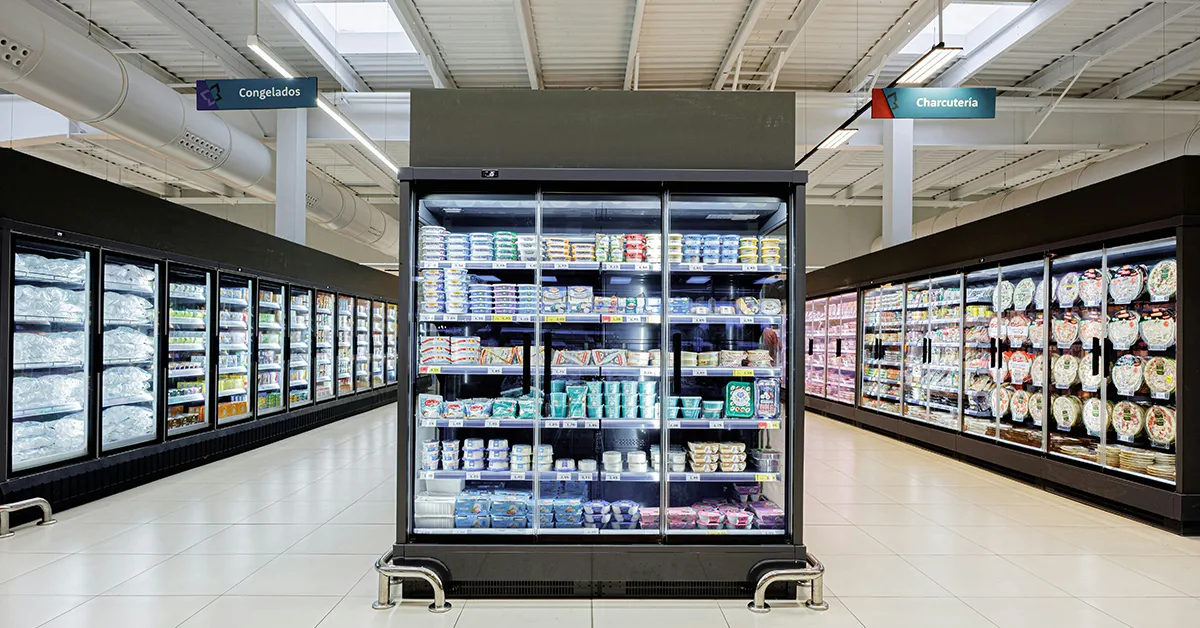
Wenn Sie ein großes Kühllager betreten, fällt Ihnen sofort etwas auf: Die Beleuchtung ist entweder schummrig und flackernd oder blendend hell mit harten Schatten. Beide Extreme sind kostspielig - nicht nur in Form von Energierechnungen, sondern auch in Form von Zwischenfällen bei der Arbeitssicherheit, dem Verderben von Produkten und dem vorzeitigen Ausfall von Beleuchtungsanlagen. Kalte Umgebungen gehören zu den anspruchsvollsten Anwendungen für die Beleuchtungstechnik, und die Wahl der falschen Leuchte kann bedeuten, dass Sie Ihr gesamtes Beleuchtungssystem innerhalb von 18 Monaten statt der versprochenen 10 Jahre austauschen müssen.
Industrielle LED-Beleuchtung für Kühllageranwendungen muss eine Reihe einzigartiger technischer Herausforderungen meistern: Minustemperaturen, die bei Standard-LED-Treibern zu Ausfällen führen, Kondensationszyklen, die Leuchten zerstören, die nicht für feuchte Umgebungen ausgelegt sind, und die anspruchsvollen Lebensmittelsicherheitsstandards, die bestimmte Leuchtenmaterialien verbieten und eine einfache Reinigung erfordern. Dieser Leitfaden enthält alles, was Gebäudemanager, Kältetechniker und Elektroinstallateure wissen müssen, um LED-Beleuchtung auszuwählen, zu spezifizieren und zu installieren, die bei -40°F (-40°C) zuverlässig funktioniert und gleichzeitig die Anforderungen von USDA, HACCP und NSF/ANSI 2 erfüllt.
Warum Standard-LED-Beleuchtungen in Kühlhäusern versagen
Der LED-Chip selbst erfüllt folgende Aufgaben besser bei kalten Temperaturen - ein geringerer Wärmewiderstand bedeutet eine höhere Lichtausbeute und eine längere Lebensdauer auf Chipebene. Das Problem liegt in allem, was den Chip umgibt: die Treiberelektronik, die Gehäusedichtungen, die Linsenmaterialien und das Befestigungsmaterial.
Treiber-Elektronik: Der primäre Fehlerpunkt
Standard-LED-Treiber verwenden Elektrolytkondensatoren, die unter -20 °C an Kapazität verlieren und schließlich ausfallen. In einem typischen Gefrierschrank mit einer Temperatur von -30°C (-22°F) kann ein nicht klassifizierter Treiber innerhalb weniger Wochen ausfallen. Kälteregulierte LED-Treiber ersetzen Elektrolytkondensatoren durch Folienkondensatoren oder verwenden spezielle Elektrolytformulierungen, die für -40 °C ausgelegt sind. Erkundigen Sie sich bei der Bewertung von Kühllagerungsvorrichtungen immer nach dem Betriebstemperaturbereich des Treiber speziell, und nicht nur das Gehäuse der Vorrichtung.
Temperaturschock und Kondensation
Gabelstaplerverkehr, Laderampenbetrieb und Wartungszyklen bringen regelmäßig warme, feuchte Luft in Tiefkühlräume. Der daraus resultierende Kondensationszyklus - einfrieren, auftauen, einfrieren - schafft zwei Probleme für Beleuchtungskörper:
- IP-Bewertung Verschlechterung: Durch Temperaturschwankungen werden die Dichtungen mit der Zeit beschädigt. Ein Gerät mit der ursprünglichen Schutzart IP65 kann diese Schutzart nach Hunderten von Kondensationszyklen verlieren, wenn das Dichtungsmaterial nicht für große Temperaturschwankungen ausgelegt ist.
- Innere Kondenswasserbildung: Wenn warme Luft während eines Auftauzyklus in ein Gerät eindringt und das Gerät wieder verschlossen wird, bevor die Feuchtigkeit verdunstet, bildet sich bei sinkenden Temperaturen Kondenswasser auf der Leiterplatte. Dies führt zu Korrosion und Kurzschlüssen, die von den Standard-IP-Schutzarten nicht erfasst werden.
Suchen Sie nach Armaturen, die speziell nach NSF/ANSI 2 oder mit NEMA 4X Gehäuse, die so konzipiert sind, dass sie nicht nur punktuell wasserdicht sind, sondern auch Kondenswasser widerstehen.
Material der Linse und der Dichtung Sprödigkeit
Standard-Polycarbonatgläser werden unter -20 °C spröde und können durch mechanische Stöße (Stöße durch Gabelstapler oder herabfallende Produkte) brechen. Für Anwendungen in Schockfrostern sind stoßfeste Polycarbonatformulierungen, gehärtete Glaslinsen oder Borosilikatglas erforderlich. Ebenso verhalten sich Standard-EPDM- und Silikondichtungen bei -40 °C anders - nur speziell für den Kältedienst zusammengesetzte Dichtungen behalten ihre Flexibilität und Dichtungseigenschaften bei.
Temperaturzonen und Beleuchtungsspezifikationen: Eine vollständige Referenz
Kühllager umfassen in der Regel mehrere Temperaturzonen, die jeweils unterschiedliche Beleuchtungsanforderungen haben. Die folgende Tabelle fasst die empfohlenen Spezifikationen nach Zonen zusammen:
| Zone Typ | Temperaturbereich | Empfohlener Beleuchtungs-Typ | Min. IP Bewertung | Min. Temperatur des Treibers | Vorgeschlagene Lumen/ft² |
|---|---|---|---|---|---|
| Empfangsdock | 40-55°F (4-13°C) | Dampfdichte lineare oder UFO-LED | IP65 | -20°C | 30-50 fc |
| Kühler / Kühllagerung | 34-40°F (1-4°C) | Dampfdichte lineare LED | IP65 | -30°C | 20-30 fc |
| Lagerung im Gefrierschrank (-10°F) | -10 bis 0°F (-23 bis -18°C) | Kältebeständig, dampfdicht oder LED-dampfdicht | IP65 / NEMA 4X | -40°C | 20-30 fc |
| Schockfroster | -40 bis -20°F (-40 bis -29°C) | Kältebeständige LED, dampfdicht, NEMA 4X | IP66 / NEMA 4X | -40°C | 20-30 fc |
| Aushärten von Speiseeis | -20 bis -10°F (-29 bis -23°C) | Kältebeständige LED, dampfdicht | IP66 / NEMA 4X | -40°C | 20-30 fc |
| Pharmazeutischer Kühlraum | 35-46°F (2-8°C) | Dampfdichte lineare LED, antimikrobielle Optionen | IP65 | -20°C | 50-75 fc (Kontrollbereiche) |
LED-Beleuchtungstypen für Kühlkettenanwendungen
Dampfdichte LED-Leuchtmittel
Die dampfdichten LED-Leuchten sind das Arbeitspferd für kühlere und gekühlte Lagerumgebungen und vollständig gegen das Eindringen von Feuchtigkeit abgedichtet. Sie sind als 2-Fuß-, 4-Fuß- und 8-Fuß-Linearkonfigurationen erhältlich und eignen sich ideal für Regalgänge, wo eine lineare Verteilung für eine gleichmäßige Beleuchtung zwischen den vertikalen Regalflächen sorgt. Moderne dampfdichte LEDs erreichen eine Lichtausbeute von 120-150 lm/W bei einer Schutzart von IP65 und sind in der Regel bis -30°C für Treiberkomponenten ausgelegt.
Beste Anwendungen: Produktkühler, Molkereiverarbeitung, Weinlagerung, pharmazeutische Kühlräume, gekühlte Verladebereiche.
Dampfsichere LED-Leuchtmittel
Die dampfdichten Leuchten sind für rauere Umgebungen konzipiert und verfügen über ein Gussgehäuse, doppelte Dichtungen und Linsen aus Glas oder schlagfestem Polycarbonat. Die Unterscheidung ist wichtig: dampfdicht bedeutet, dass sie gegen das Eindringen von Dampf abgedichtet sind; dampfdicht bedeutet, dass sie gegen Hochdruckreinigung und robustere Kondensationszyklen beständig sind. Achten Sie auf die NEMA 4X-Zertifizierung, die das Bestehen eines Abspritztests mit 65 PSI erfordert.
Beste Anwendungen: Schockfroster, Verarbeitungslinien für Tiefkühlkost, Verarbeitung von Meeresfrüchten, Fleischschneidebereiche.
Kühlhaus UFO LED High Bay
In hohen Tiefkühllagern (mehr als 20 Fuß) bieten LED-Hochregale im UFO-Stil mit Kältetauglichkeit den Strahlengang, der für die Beleuchtung von Kommissioniervorgängen auf Bodenhöhe erforderlich ist. Wählen Sie Modelle mit einer Nennbetriebstemperatur von -40 °C und stellen Sie sicher, dass der Treiber integriert ist (nicht ferngesteuert), damit die gesamte kälteempfindliche Elektronik im klimatisierten Raum bleibt. Modelle mit 150 W bis 240 W können in diesen Anwendungen alte Metallhalogenidleuchten mit 400 W bis 600 W ersetzen.
LED-Tri-Proof-Leuchten
Eine kostengünstige Option für Zwischentemperaturen sind tri-proof LED-Leuchten (staubdicht, abtropfsicher, stoßfest), die häufig in Kühlräumen und leichten Kühlumgebungen eingesetzt werden, in denen eine vollständige Dampfdichtigkeit nicht erforderlich ist. Sie bieten wettbewerbsfähige Preise, sollten aber nicht unter -15 °C eingesetzt werden, wenn keine ausdrückliche Kältebeständigkeit der Treiber vorliegt.
Einhaltung der Lebensmittelsicherheit: HACCP-, USDA- und NSF-Anforderungen
In Lebensmittelverarbeitungs- und -lagereinrichtungen geht die Einhaltung der Beleuchtungsvorschriften über die elektrischen Vorschriften hinaus. Die wichtigsten Normen sind:
NSF/ANSI 2: Normen für Lebensmittelausrüstungen
Die NSF/ANSI 2-Zertifizierung gilt für Lebensmittelverarbeitungsanlagen, die mit Lebensmitteln in Berührung kommen. Für die Beleuchtung in Lebensmittelverarbeitungsbereichen müssen die Leuchten aus Materialien bestehen, die nicht abblättern, abplatzen oder die Lebensmittel verunreinigen können. Dies schließt die meisten lackierten Metalloberflächen aus und erfordert nicht poröse, leicht zu reinigende Gehäuse. Für NSF-2-gelistete Leuchten werden Edelstahl, Polycarbonat bestimmter Güteklassen oder FDA-konforme Materialien verwendet.
Anforderungen der HACCP-Zone
In HACCP-Plänen (Hazard Analysis and Critical Control Points) sind häufig Beleuchtungsstärken in Kontroll- und Verarbeitungsbereichen festgelegt. Zu den üblichen Anforderungen gehören:
- 220 Lux (20 fc) Minimum für Lagerbereiche
- 540 Lux (50 fc) an Kontrollstellen
- 1.080 Lux (100 fc) an den Stationen der Endkontrolle und der Qualitätskontrolle
- Bruchsichere Gläser oder Schutzabdeckungen in Lebensmittelproduktionsbereichen
USDA- und FDA-rechtliche Anforderungen
USDA-geprüfte Fleisch- und Geflügelbetriebe müssen gemäß 9 CFR 416.2(b)(2) eine Beleuchtungsstärke von 108 Lux (10 fc) in Lagerbereichen und 215 Lux (20 fc) in Arbeitsbereichen einhalten. Der Food Safety Modernization Act (FSMA) der FDA schreibt keine Beleuchtungsstärken vor, verlangt aber, dass die Einrichtungen “angemessen beleuchtet” sein müssen, um Kontaminationen zu verhindern - das bedeutet, dass bestimmte Beleuchtungsstärken in den Lebensmittelsicherheitsplänen der Einrichtungen dokumentiert werden sollten.
Anforderung für bruchsichere Gläser
In der Lebensmittelverarbeitung und in Bereichen, in denen Lebensmittel offen gelagert werden, verlangen praktisch alle gesetzlichen Bestimmungen bruchsichere Gläser oder Schutzabdeckungen für Armaturen. Polycarbonatgläser erfüllen diese Anforderung. Gläser aus Klarglas erfordern eine zusätzliche Polycarbonathülle oder einen Drahtschutz.
Energieeffizienz in der Kühllagerung: ROI, der sich schneller auszahlt, als Sie denken
Energieeffizienz-Nachrüstungen in Kühllagern haben aus zwei Gründen kürzere Amortisationszeiten als in typischen Industrieumgebungen: Die Beleuchtung läuft in den meisten Kühllagern rund um die Uhr, und die durch die Beleuchtung erzeugte Wärme erhöht die Kühllast - das heißt, jedes eingesparte Watt Beleuchtungsleistung reduziert sowohl die Strom- als auch die Kühlkosten.
Der Kältemultiplikatoreffekt
Jedes Watt Wärme, das durch ineffiziente Beleuchtung in einem gekühlten Raum erzeugt wird, muss vom Kältesystem abgeführt werden. Bei einem typischen COP (Coefficient of Performance) von 2,0 für industrielle Kältesysteme erfordert die Abfuhr von 1 Watt Wärme etwa 0,5 Watt zusätzliche Kühlenergie. Dies bedeutet:
Gesamtenergiekosten für 1 W in einem Kühlraum = 1 W (Beleuchtung) + 0,5 W (Kühlung zur Abfuhr der Wärme) = 1,5 W effektive Energiekosten
Wenn Sie eine 400-W-Metallhalogenid-Leuchte durch eine 150-W-LED-Leuchte ersetzen, sparen Sie direkt 250 W und reduzieren die Kühllast um 250 W × 0,5 = 125 W an zusätzlichen Kühlungseinsparungen. Ihre effektive Energieeinsparung pro Leuchte beträgt 375 W, nicht 250 W.
Beispiel für den ROI einer LED-Nachrüstung in einem Kühllager
| Parameter | Vorher (Metallhalogenid) | Nachher (LED) |
|---|---|---|
| Anzahl der Fixtures | 80 | 80 |
| Watt pro Leuchte | 400W | 150W |
| Beleuchtungslast insgesamt | 32.000W (32 kW) | 12.000W (12 kW) |
| Einsparungen bei der Kühlung (0,5× Reduzierung der Beleuchtung) | - | 10 kW eingespart |
| Gesamteffektive Reduktion | - | 30 kW |
| Jährliche Betriebsstunden (24/7 Betrieb) | 8.760 Stunden | 8.760 Stunden |
| Jährliche Energieeinsparungen | - | 262.800 kWh/Jahr |
| Energiekosten @ $0,12/kWh | $33,523/Jahr | $12.614/Jahr |
| Jährliche Einsparungen | - | $20.909/Jahr |
| Vorrichtungskosten (installiert) | - | ~$55.000 insgesamt |
| Einfache Amortisation | - | ~2,6 Jahre |
Diese Amortisationsberechnung berücksichtigt nicht die DLC-Rabatte (in der Regel $15-$50/Leuchte für DLC-gelistete Kühlhaus-LEDs) oder die reduzierten Wartungskosten durch den Wegfall des jährlichen Lampen-/Vorschaltgeräteaustauschs.
Beleuchtungsplanung für Kühllagerregale
Vertikale Beleuchtungsstärke in Hochregallagern
Traditionelle photometrische Pläne für Lagerhäuser konzentrieren sich auf die horizontale Beleuchtungsstärke in Bodenhöhe. In Kühllagern mit dichten Regalen (20-40 Fuß hoch) ist die vertikale Beleuchtungsstärke - das Licht, das auf die vertikalen Flächen der Palettenladungen und Regaletiketten trifft - ebenso wichtig für die Sicht des Gabelstaplerfahrers und die Genauigkeit der Bestandsaufnahme. Legen Sie eine vertikale Beleuchtungsstärke von mindestens 10 fc (108 Lux) auf Höhe der Regalflächen fest, gemessen in 15 Fuß Höhe über dem Boden in hohen Regalgassen.
Montage im Gang oder quer zum Gang
In Kühlhäusern mit schmalen Gängen (NA) und sehr schmalen Gängen (VNA) sollten die dampfdichten Langfeldleuchten parallel zu den Gängen (entlang der Mittellinie des Ganges) und nicht senkrecht montiert werden. Dadurch wird die Anzahl der benötigten Leuchten reduziert und gleichzeitig eine bessere vertikale Beleuchtungsstärke an den Regalwänden erreicht. In gangübergreifenden oder Großlagerbereichen bieten UFO-Hochregale mit 60° Abstrahlwinkel eine hervorragende Abdeckung auf Bodenhöhe.
Notbeleuchtung in Tiefkühlbereichen
Die Notbeleuchtung in begehbaren Gefrierräumen und Kühllagern stellt eine besondere Herausforderung dar. Standardmäßige batteriegestützte Notbeleuchtungen fallen bei Minusgraden innerhalb von Minuten aus. LED-Notleuchten mit Kälteschutz verwenden LiFePO4 (Lithium-Eisenphosphat)-Batterien, deren Ladekapazität und Entladeleistung bis zu -40°C erhalten bleibt. Spezifizieren Sie kälteresistente Notbeleuchtungen für alle Bereiche, in denen der Zugang von Personen unter -10°F erforderlich ist.
Best Practices für die Installation von LED-Beleuchtung in der Kühlkette
Vorwärmzeitige Fahreranforderung
Einige LED-Treiber für die Kältespeicherung benötigen eine “Vorwärmphase”, wenn sie bei sehr niedrigen Temperaturen zum ersten Mal eingeschaltet werden. Bei -40°C kann der Einschaltstrom des Treibers höher sein als der Nennstrom, und einige Geräte haben eine eingebaute Softstart-Verzögerung. Erkundigen Sie sich bei Ihrem Lieferanten, ob eine Vorwärmphase erforderlich ist und wie das Einschaltverhalten bei der Mindestnenntemperatur ist, bevor Sie das Gerät für Anwendungen in Tiefkühlhäusern spezifizieren.
Überlegungen zu Rohrleitungen und Verdrahtung
Flexibles Kabelschutzrohr muss für den Einsatz bei kalten Temperaturen geeignet sein. Ein standardmäßiger flexibler PVC-Mantel wird bei Temperaturen unter -10°C spröde und kann reißen, wodurch die Verdrahtung freigelegt wird. Verwenden Sie in Tiefkühlumgebungen einen flexiblen Edelstahlschlauch oder einen kältebeständigen LFNC (Liquidtight Flexible Non-Metallic Conduit).
Abdichtungsanforderungen
An den Stellen, an denen die Rohrleitungen vom Gefrierraum in den warmen Raum führen (durch eine Wand oder Decke), sollten Sie eine Appleton-Dichtungsverschraubung oder eine gleichwertige Dichtung einbauen, um zu verhindern, dass warme, feuchte Luft in den Gefrierraum eindringt und in den Rohrleitungen kondensiert. Ungedichtete Kabelkanäle sind eine der häufigsten Ursachen für Ausfälle der Kühlraumbeleuchtung, die Elektriker feststellen.
Abstand und Abstrahlwinkel der Leuchte
In Gefrierraumumgebungen mit Regalen neigen die Standardempfehlungen für photometrische Abstände (typischerweise ein Verhältnis von 1,0 bis 1,2 zwischen Abstand und Montagehöhe) dazu, die Lichtabsorption von Produkten in Regalen zu unterschätzen. Verwenden Sie eine photometrische Software (AGi32 oder DIALux) mit einem angenommenen Reflexionsgrad von 20% für den Boden und 30% für die Wände in Tiefkühlräumen, anstatt der Standardwerte für Lagerräume von 30% für den Boden und 50% für die Wände.
Zertifizierungs-Checkliste für die Beschaffung von Kühlhaus-LED-Leuchtmitteln
- ☑ Betriebstemperaturbereich: Treiber speziell für -40°C für Schockfrosteranwendungen ausgelegt
- ☑ IP-Bewertung: Mindestens IP65 für Kühlschränke; IP66 für Gefrierschränke und Abwaschräume
- ☑ NEMA-Bewertung: NEMA 4X für Bereiche, die Kondenswasserbildung ausgesetzt sind oder gewaschen werden müssen
- ☑ DLC-Auflistung: Erforderlich für die Gewährung von Rabatten
- ☑ UL-gelistet: UL 1598 für Feuchträume
- ☑ NSF/ANSI 2 oder aufgelistet: Erforderlich in Bereichen, die mit Lebensmitteln in Berührung kommen, und in der Lebensmittelproduktion
- ☑ Bruchsichere Linse: Erforderlich in allen Bereichen der Lebensmittelverarbeitung und der offenen Lagerung von Lebensmitteln
- ☑ Material der Linse: Schlagfestes Polycarbonat oder Borosilikatglas für Gefrieranwendungen
- ☑ Material der Dichtung: Kältebeständiges Silikon oder EPDM für den Einsatz bei -40°C
- ☑ Notfallversion: LiFePO4-Batteriechemie für Notausstiege bei Temperaturen unter dem Gefrierpunkt
Integration von LED-Beleuchtung und intelligenten Steuerungen in Kühllager
Bei der Kühllagerung sind die energieeffizientesten Kontrollstrategien folgende:
- Zonenbasierte Leerstandserfassung: Verwenden Sie an der Decke montierte Mikrowellensensoren (Radarsensoren) anstelle von PIR-Sensoren, um eine bessere Leistung in Umgebungen mit niedrigen Temperaturen zu erzielen.
- 0-10V Dimmen: Stellen Sie die Grundbeleuchtungsstärke auf 40-50% außerhalb der Stoßzeiten ein und erhöhen Sie sie auf 100%, wenn die Zonen besetzt sind. Das Dimmen reduziert sowohl die Beleuchtungs- als auch die Kühllast.
- Docktürverriegelung: Integrieren Sie Beleuchtungssteuerungen mit Sensoren für Verladetore, um die Beleuchtung in den Empfangsbereichen zu erhöhen, wenn die Verladetore geöffnet sind.
- Geplante Szenen: Programmieren Sie Lichtszenen für Schichtwechsel, Zykluszählungen und Reinigungszeiten mit unterschiedlichen Lux-Zielen für jede Aktivität.
Interne Links: Weitere Ressourcen zu industriellen LED
- Leitfaden zur Optimierung der LED-Beleuchtung von Lagerhallen - Umfassende Beleuchtungsstrategie für Lagerhallen, die Zonenplanung, Regalbeleuchtung und ROI-Rahmenbedingungen umfasst
- Leitfaden für explosionssichere LED-Beleuchtung - Auswahl von LED für explosionsgefährdete Bereiche für ATEX/NEC klassifizierte Bereiche
- Leitfaden für industrielle LED-Dimmung und -Steuerung - 0-10V, DALI-2 und drahtlose Dimmprotokolle für Industrieanlagen
Häufig gestellte Fragen: Kühlhaus LED-Beleuchtung
F: Kann ich Standard-LED-Hochregallampen in einer Tiefkühltruhe verwenden?
Nein. Standard-LED-Hochregalbeleuchtungen sind in der Regel für Betriebstemperaturen von 0°C bis +45°C ausgelegt. In Tiefkühlumgebungen bei -18°C bis -40°C fallen die Elektrolytkondensatoren in Standardtreibern aus - oft innerhalb von Wochen bis Monaten. Spezifizieren Sie immer Leuchten mit Treibern, die ausdrücklich für die Mindestbetriebstemperatur Ihrer Anwendung ausgelegt sind.
F: Was ist der Unterschied zwischen den Schutzarten IP65 und NEMA 4X für Kühlräume?
IP65 bestätigt, dass ein Gerät staubdicht und gegen Niederdruckwasserstrahlen geschützt ist. NEMA 4X stellt zusätzliche Anforderungen an die Korrosionsbeständigkeit und - besonders wichtig für die Kühllagerung - an den Schutz gegen die Auswirkungen der internen Kondensation bei wiederholten Frost-Tau-Zyklen. Für Tiefkühlumgebungen, die Abwasch- oder Kondensationszyklen ausgesetzt sind, ist NEMA 4X die stärkere Spezifikation.
F: Wie viel kann ich bei den Kühlkosten einsparen, wenn ich in einem Gefrierschrank auf LED umrüste?
Für jedes Watt Wärme, das durch die Umstellung von älteren Technologien (HID, Leuchtstofflampen) auf LED eliminiert wird, sparen Sie etwa 0,5 zusätzliche Watt an Kühlenergie bei einem typischen COP von 2,0. Eine Verringerung der Beleuchtungslast in einem Gefrierschrank um 30 kW kann zu Einsparungen von 15 kW bei der Kühlung führen - das sind etwa $15.768/Jahr bei $0,12/kWh im 24/7-Betrieb.
F: Welche LED-Farbtemperatur eignet sich am besten für Kühl- und Gefrierhausumgebungen?
5000K (Tageslicht) ist die am häufigsten spezifizierte Farbtemperatur für den Kühlhausbetrieb. Der hohe CCT-Wert bietet einen hervorragenden Kontrast zum Lesen von Etiketten und zur Produktinspektion. Vermeiden Sie warmweißes Licht (2700K-3000K) in Tiefkühlräumen. Das gelblich gefärbte Licht kann die Unterscheidung von Produktfrische-Indikatoren erschweren und verringert die wahrgenommene Helligkeit.
F: Müssen LED-Armaturen für alle Kühlräume eine NSF-Zertifizierung haben?
Nicht überall, aber in USDA-geprüften Lebensmittelverarbeitungsbetrieben ist eine NSF/ANSI 2-Listung vorgeschrieben und in allen Bereichen mit offenen Lebensmitteln, in denen ein Bruch der Halterung das Produkt kontaminieren könnte, dringend empfohlen. In versiegelten Lagerbereichen für verpackte Produkte ist die NSF-Listung die beste Praxis, aber je nach den gesetzlichen Bestimmungen möglicherweise nicht vorgeschrieben.
F: Wie hoch ist die typische Lebensdauer von LED-Leuchten mit Kälteschutz in Gefriertruhen?
Kältesichere LED-Leuchten namhafter Hersteller sind in der Regel für 50.000 bis 100.000 Stunden L70 ausgelegt, selbst in Umgebungen unter Null Grad. In der Praxis sollten ordnungsgemäß spezifizierte und installierte Gefrierstrahler eine Lebensdauer von 10-15 Jahren bei minimaler Wartung aufweisen - im Vergleich zu 1-2-jährigen Austauschzyklen, die für T8-Leuchtstofflampen oder HID in derselben Umgebung typisch sind.
F: Kann ich Anwesenheitssensoren in Kühlhäusern verwenden?
Ja, aber verwenden Sie kälteresistente Mikrowellen-/Radar-Belegungsmelder anstelle von Standard-PIR-Sensoren. PIR-Sensoren erkennen Körperwärme in Abhängigkeit von der Umgebungstemperatur - in einer sehr kalten Umgebung kann extreme Kälte zu Zuverlässigkeitsproblemen mit der Sensorelektronik selbst führen. Mikrowellensensoren arbeiten nach dem Prinzip der Bewegungserkennung unabhängig von Temperaturunterschieden und sind unter -20 °C zuverlässiger.
Schlussfolgerung: Investieren Sie in erstklassige Qualität, die sich in 2-3 Jahren amortisiert
Bei der LED-Beleuchtung von Kühllagern sollte man nicht an der Qualität der Leuchten sparen. Die Mehrkosten zwischen einer Standard-LED-Leuchte und einer ordnungsgemäß kälteregulierten, NSF-konformen dampfdichten Leuchte liegen in der Regel bei $50-$150 pro Leuchte. In Anbetracht des Kältemultiplikators bei den Energieeinsparungen, des 24/7-Betriebsprofils der meisten Kühlketteneinrichtungen und des Wegfalls des häufigen Lampenaustauschs in schwer zugänglichen Gefrierraumumgebungen gehört der ROI für ordnungsgemäß spezifizierte LED-Kühlhausprojekte durchweg zu den besten in der Industriebeleuchtung - typischerweise 2 bis 3 Jahre oder weniger.
Der Schlüssel liegt in der Disziplin bei der Spezifikation: Überprüfen Sie die Temperaturwerte der Treiber, bestätigen Sie NEMA 4X für kondensationsgefährdete Bereiche, bestehen Sie auf der NSF-Listung für Lebensmittelproduktionsbereiche und modellieren Sie die gesamten Energieeinsparungen bei der Kühlung - nicht nur die Wattleistung der Beleuchtung - wenn Sie Ihren Business Case erstellen.
Für detaillierte Beleuchtungsspezifikationen oder um ein photometrisches Layout für Ihr Kühlhaus anzufordern, wenden Sie sich bitte an das Recolux LED-Team für Industriebeleuchtung, das Sie anwendungsspezifisch berät.