
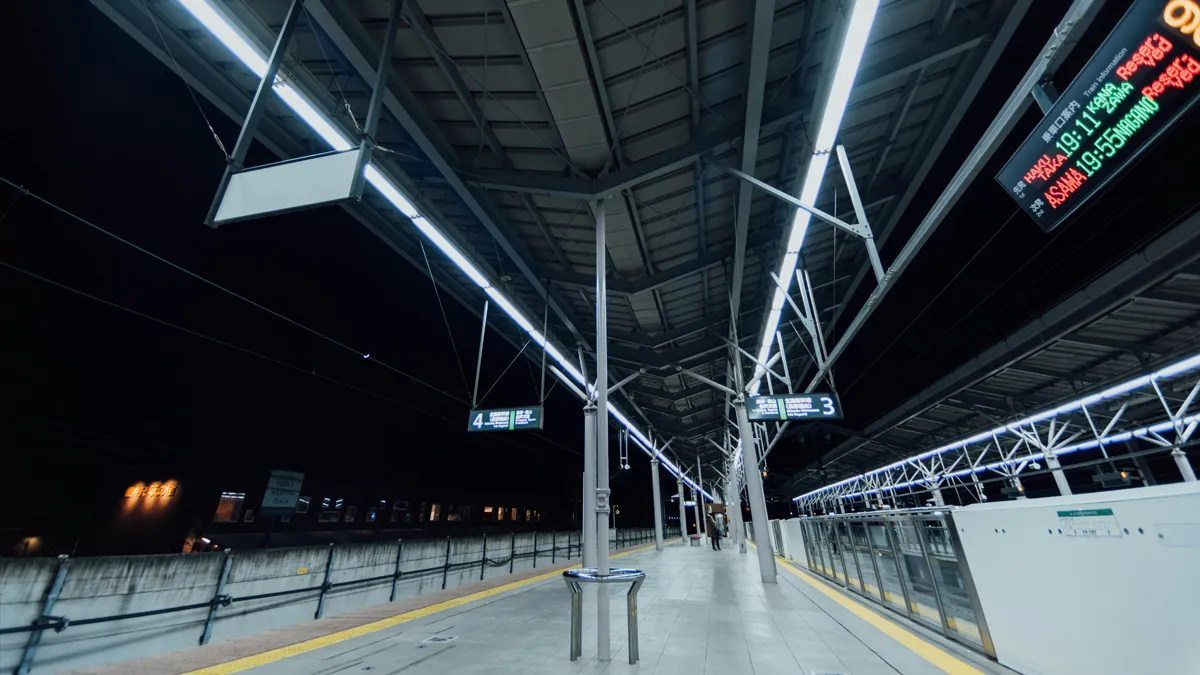
Every year, an estimated $3 billion worth of upward-directed light leaks into the night sky over the United States alone—light that does no useful work, contributes nothing to safety, and actively harms ecosystems that evolved under natural darkness. The International Dark-Sky Association (IDA) now estimates that more than 80% of the world’s population lives under skyglow, with 99% of Europeans and Americans experiencing artificially brightened nights.
For lighting specifiers, this represents both a crisis and an opportunity. New regulations in the European Union (EU Ecolabel for outdoor luminaires), several U.S. states (California’s Title 24, Hawaii’s dark sky legislation), and growing municipal ordinances are making dark-sky compliance a specification requirement rather than a voluntary gesture. This guide covers the technical, regulatory, and design aspects of dark-sky compliant LED lighting for engineers and specifiers who need to deliver compliant installations in 2026 and beyond.
What Is Dark Sky Lighting—and Why It Matters Beyond Astronomy
The term “dark sky lighting” suggests a focus on astronomical observation, and indeed the astronomy community was the first to raise alarms about light pollution. But the case for dark-sky compliant lighting now rests on three independent pillars:
Ecological impact. Nocturnal animals—from migratory birds to pollinators to amphibians—rely on natural light cues to navigate, feed, and reproduce. Artificial light at night (ALAN) disrupts these behaviors in documented ways. Migratory birds disoriented by city glow suffer mass mortality events; sea turtle hatchlings drawn toward coastal artificial lighting fail to reach the ocean; insect populations around permanently lit roadways show reduced pollination activity. The scientific literature on ecological light pollution has expanded from a handful of papers in 2010 to more than 500 peer-reviewed studies in 2025.
Human health. The link between nighttime light exposure and human health outcomes is now well-established. The American Medical Association (AMA) issued guidance as early as 2016 warning about high-CCT LED lighting and melatonin suppression. More recent longitudinal studies associate residential exposure to high-intensity outdoor lighting with increased risk of breast cancer, obesity, and sleep disorders. While the lighting industry has been slow to acknowledge these findings, the regulatory trend is clear: several European countries now mandate maximum CCT limits for residential-area outdoor lighting.
Energy waste. The “rebouncing effect” of LED efficiency—where lower per-lumen operating costs lead to more total installed light—has partially negated the energy savings of the LED transition. Dark-sky compliant design, with its emphasis on full-cutoff optics and carefully justified lighting levels, directly addresses this by eliminating wasted uplight and over-lighting.
The Technical Principles of Dark-Sky Compliant Fixture Design
Full Cutoff and BUG Ratings
The foundational requirement for dark-sky compliance is controlling where light goes. The Illuminating Engineering Society’s *BUG (Backlight, Uplight, Glare)* rating system, introduced in IES TM-15-20, quantifies this control.
A fully compliant dark-sky installation uses luminaires with:
- Uplight (U) rating of 0 or 1 — meaning essentially no light is emitted above the horizontal plane (90° from nadir)
- Backlight (B) and Glare (G) ratings appropriate to the application zone — typically B2–B3 and G2–G3 for residential interfaces, with slightly relaxed values permitted in intensive commercial zones
The IDA’s *IDA Fixture Seal of Approval* program certifies luminaires that meet these criteria. As of 2026, more than 400 luminaire models from major manufacturers carry this certification. Specifiers should treat IDA certification as a baseline requirement for dark-sky projects, not an optional premium feature.
Optical Control: Why Full-Cutoff Shields Matter
The difference between a standard floodlight and a dark-sky compliant area luminaire is primarily in the optics. A conventional floodlight with a symmetric beam distribution sends 15–30% of its output above the horizontal plane, depending on mounting height and aiming angle. This uplight scatters off atmospheric particles (aerosols, humidity, dust) and creates skyglow that can be visible from more than 100 km away under clear conditions.
Full-cutoff luminaires use a combination of three design features to eliminate uplight:
1. Aperture shielding — the luminous surface is recessed behind a lip or shroud that prevents any direct line of sight to the light source above horizontal
2. Asymmetric reflectors — the optical chamber is shaped to direct essentially all flux below 80° from nadir, with a sharp cutoff at the horizon
3. Secondary shielding accessories — adjustable visors, side shields, and baffles that can be field-installed to address site-specific spill concerns
For area lighting applications (parking lots, pathways, perimeter lighting), the IDA recommends luminaires with a maximum intensity angle no higher than 70° from nadir. This ensures that even reflected light from the ground does not scatter above the fixture into the night sky.
Color Temperature and Spectral Power Distribution
The debate over CCT in outdoor lighting has evolved substantially since the first widespread LED streetlight conversions. Early LED installations favored 4000–5000K CCT to maximize lumens per watt, but this came at a significant cost: high-CCT light scatters more efficiently in the atmosphere (Rayleigh scattering is inversely proportional to wavelength to the fourth power), making blue-rich light a disproportionately large contributor to skyglow.
Current dark-sky best practice, as reflected in IDA guidance and the latest EU outdoor lighting standards, specifies:
| Application Zone | Maximum CCT | Minimum CRI | الملاحظات |
|---|---|---|---|
| Dark-sky preserve perimeter | 2200K | Ra ≥ 70 | Amber/PC-amber LEDs preferred |
| Residential interface | 2700 كيلو | Ra ≥ 70 | |
| General commercial outdoor | 3000 كيلو | Ra ≥ 70 | |
| Industrial/outdoor sports (with shielding) | 4000 كلفن | Ra ≥ 80 | Full-cutoff mandatory |
The spectral power distribution (SPD) matters as much as the CCT number. “PC-amber” LEDs (phosphor-converted amber) emit almost no radiation below 530 nm, which eliminates the short-wavelength scattering responsible for skyglow. Several municipalities in dark-sky sensitive areas (Tucson, Flagstaff, parts of Hawaii) now mandate PC-amber or filtered LED sources for all new outdoor installations.
Regulatory Landscape in 2026
United States
Dark-sky regulations in the U.S. remain primarily at the state and municipal level, creating a patchwork of requirements that specifiers must navigate project by project.
California Title 24 (2025 cycle) now requires outdoor lighting in non-residential applications to use only fully shielded fixtures with CCT ≤ 3000K and uplight ≤ 1% of total flux. The reach of Title 24 continues to expand—the 2025 cycle added requirements for outdoor lighting control systems that were not present in the 2022 edition.
Hawaii Revised Statutes Chapter 342B establishes some of the most stringent outdoor lighting requirements in the U.S., mandating full-cutoff fixtures and CCT ≤ 2700K in all new installations within designated dark-sky zones. The law specifically cites the impact on sea turtle nesting, making Hawaii a useful case study for wildlife-protection-driven lighting regulation.
Municipal ordinances have proliferated since 2020. More than 200 U.S. municipalities now have outdoor lighting ordinances that reference IDA guidelines or BUG ratings. Notable examples include Tucson (Pima County Outdoor Lighting Code), Flagstaff (the first International Dark Sky City, with regulations dating to 1989 but substantially updated in 2023), and recently New York City (Local Law 148, requiring all city-owned outdoor lighting to be dark-sky compliant by 2027).
European Union
The EU has taken a more comprehensive approach through product regulation rather than installation mandates.
EU Ecolabel for outdoor luminaires (updated 2024) sets strict limits on uplight (≤ 0.5% of total luminous flux), requires CCT ≤ 3000K for all outdoor applications, and mandates that luminaires be “non-adjustable” in color temperature (preventing field changes to higher-CCT settings). Luminaires carrying the Ecolabel are automatically compliant with most member-state dark-sky requirements.
EN 13201 (Road lighting performance) was updated in 2025 to include a “sky glow impact factor” in the calculation methodology for road lighting design. This means that lighting designs in EU member states must now account for atmospheric scattering in their environmental impact assessments for major road projects.
International and Voluntary Standards
IDA/IES TM-11-22 provides the most widely referenced testing method for uplight measurement. Specifiers should require TM-11-22 test reports for any luminaire proposed for dark-sky compliant projects, as manufacturer “zero uplight” claims are sometimes based on calculation rather than physical measurement.
CIE Position Statement PS-04 (2023) on light pollution summarizes the international commission’s consensus on measurement methods and design principles. While not regulatory, it is increasingly cited in specification documents for large infrastructure projects.
Wildlife-Specific Lighting Design
Sea Turtle Nesting Beaches
The intersection of outdoor lighting and wildlife conservation is perhaps most visible in sea turtle nesting habitats. Female sea turtles avoid brightly lit beaches for nesting; hatchlings disoriented by artificial light fail to orient toward the ocean and suffer near-total mortality.
The Florida Fish and Wildlife Conservation Commission (FWC) establishes the baseline standard for turtle-friendly lighting in the U.S. The FWC criteria are:
- CCT ≤ 2700K (preferably amber/PC-amber)
- Fully shielded, directing light only where needed
- Mounted as low as practicable to reduce visible range from the beach
- Controlled with timers or photocells to operate only when necessary
These principles are now incorporated into dark-sky compliant design more broadly, even outside turtle habitat zones, because the optical control required for turtle protection is essentially identical to the control required for dark-sky compliance.
Bird Migration Corridors
An estimated 1–3 billion birds die annually in the U.S. from building collisions, with artificial lighting a major contributing factor. During migration seasons (spring and fall), brightly lit buildings attract birds into lethal urban environments.
الـ Lights Out program, now active in more than 40 North American cities, asks building owners to extinguish or dim non-essential outdoor and facade lighting between 11 PM and dawn during peak migration periods. Several cities (including Chicago, Toronto, and New York) have codified Lights Out requirements into law.
For lighting specifiers, the bird-migration angle introduces a seasonal control requirement. DALI-2 or similar addressable control systems can implement scheduled dimming (to 0% or near-0%) during migration seasons without requiring manual intervention. The energy savings from this seasonal dimming provide an additional economic argument for control system investment.
Insect and Pollinator Impact
The impact of ALAN on insect populations has gained substantial scientific attention since 2020. Artificial light at night disrupts insect navigation, mating behaviors, and predator-prey dynamics. The mechanism is wavelength-dependent: short-wavelength (blue-rich) light has disproportionately large impact on insect attraction and disorientation.
Design strategies that reduce insect impact align closely with dark-sky principles:
- Use CCT ≤ 2700K wherever feasible
- Eliminate uplight (insects are strongly attracted to vertical light sources)
- Use shielded fixtures that direct light only to the ground plane
- Implement curfew controls (extinguishing non-essential lighting after a set time)
Control Systems for Dark-Sky Compliance
Scheduled Extinguishment and Curfews
The simplest and most effective dark-sky control strategy is turning lights off when they are not needed. Many outdoor lighting installations operate from dusk to dawn on photocell control, regardless of whether the illuminated area is occupied.
A lighting curfew — extinguishing non-essential outdoor lighting after a specified hour (typically 11 PM or midnight) — can reduce annual operating hours by 30–40% with minimal impact on safety in low-traffic areas. The key specification detail is ensuring that curfew-controlled circuits are separate from safety-critical circuits (egress lighting, emergency assembly areas, perimeter security).
Adaptive Lighting with Dimming
Where full extinguishment is not acceptable (due to security or code requirements), adaptive dimming provides a middle path. A typical adaptive lighting schedule for a commercial outdoor area might be:
| Time Period | Dimming Level | الأساس المنطقي |
|---|---|---|
| Sunset to 22:00 | 100% | Peak activity period |
| 22:00 to 00:00 | 60% | Reduced activity, full light still available |
| 00:00 to dawn | 20% | Safety baseline only, substantial energy and skyglow reduction |
The energy savings from adaptive dimming accumulate rapidly. A 100-watt LED area luminaire dimmed to 20% consumes approximately 30 watts (accounting for driver efficiency at reduced load), achieving 70% energy reduction during the dimmed period.
Monitoring and Verification
Dark-sky compliant installations should include provisions for verifying performance after installation. Hand-held sky quality meters (SQMs) provide a quantitative measure of sky brightness and can document pre- and post-installation sky quality. More sophisticated approaches use calibrated fisheye photography to document the installed lighting’s contribution to local skyglow.
For large installations, several state transportation agencies now require post-installation skyglow measurements as a condition of acceptance. The measurement protocol typically follows CIE 150:2017, which specifies measurement geometry and reporting requirements.
Specifying Dark-Sky Compliant LED Lighting: A Practical Checklist
For specifiers preparing bid documents or design submissions in 2026, the following checklist covers the critical compliance points:
Fixture Selection
- [ ] BUG rating: U0 or U1 (no uplight), B and G ratings appropriate to zone
- [ ] IDA Fixture Seal of Approval (preferred) or manufacturer’s TM-11-22 uplight test report
- [ ] CCT ≤ 3000K (≤ 2700K preferred for residential/wildlife zones)
- [ ] Fully shielded optical design (no direct view of LED above horizontal)
- [ ] Adjustable shielding accessories available for site-specific spill control
عناصر التحكم
- [ ] Photocell control with astronomical clock (seasonal dusk/dawn adjustment)
- [ ] Curfew scheduling capability (separate circuits for essential and non-essential lighting)
- [ ] Adaptive dimming compatibility (0-10V or DALI-2)
- [ ] Manual override with automatic reset (for emergency or special events)
Environmental and Regulatory
- [ ] Confirm compliance with applicable municipal dark-sky ordinance
- [ ] For coastal projects: verify compliance with FWC or equivalent wildlife agency requirements
- [ ] For EU projects: confirm EU Ecolabel compliance if required by member state
- [ ] Document pre-installation sky quality (SQM reading) as baseline
Installation Quality
- [ ] Fixture aiming angles documented and verified during commissioning
- [ ] Field-installed shielding (side shields, visors) inspected for proper installation
- [ ] Light trespass measurement at property boundary (confirm ≤ 0.1 footcandle for adjacent residential)
The Business Case for Dark-Sky Compliant Lighting
Beyond regulatory compliance and environmental stewardship, dark-sky compliant design makes strong financial sense in most applications.
Energy cost reduction. Eliminating uplight (which does no useful work) and implementing adaptive controls typically reduces outdoor lighting energy consumption by 40–60% compared to continuous-operation, non-controlled installations. At commercial electricity rates, the payback period for control system investment is often 2–4 years.
Reduced light trespass liability. Neighbors increasingly challenge overly bright outdoor lighting through legal complaints. Dark-sky compliant designs, with their emphasis on full cutoff and careful aiming, substantially reduce the risk of light trespass disputes.
Market differentiation. For commercial developers, dark-sky compliance is an increasingly marketable sustainability credential. Several green building rating systems (LEED v5, BREEAM) now award points for dark-sky compliant outdoor lighting design.
Future-proofing. The regulatory trend is unambiguously toward stricter outdoor lighting controls. Specifying dark-sky compliant systems in 2026 protects the owner against future retrofit requirements as ordinances tighten.
الخلاصة
Dark-sky compliant LED lighting is no longer a niche concern for astronomical observatories and remote resorts. It is a mainstream specification requirement driven by measurable ecological harm, emerging human health data, and—increasingly—binding regulation. The technical pathways are well-established: full-cutoff optics, CCT control, adaptive dimming, and careful aiming are proven approaches that deliver compliant installations without compromising safety or security.
For the lighting specifier in 2026, the question is not whether to design for dark-sky compliance, but how quickly local regulations will make it mandatory. Those who develop expertise in compliant design now will be well-positioned as the regulatory landscape continues to evolve.
—
About the Author: This guide was developed for lighting specifiers, electrical engineers, and sustainability professionals designing outdoor LED lighting systems. For fixture specifications and BUG rating documentation suitable for dark-sky compliant installations, consult manufacturers with IDA Fixture Seal of Approval certification.