
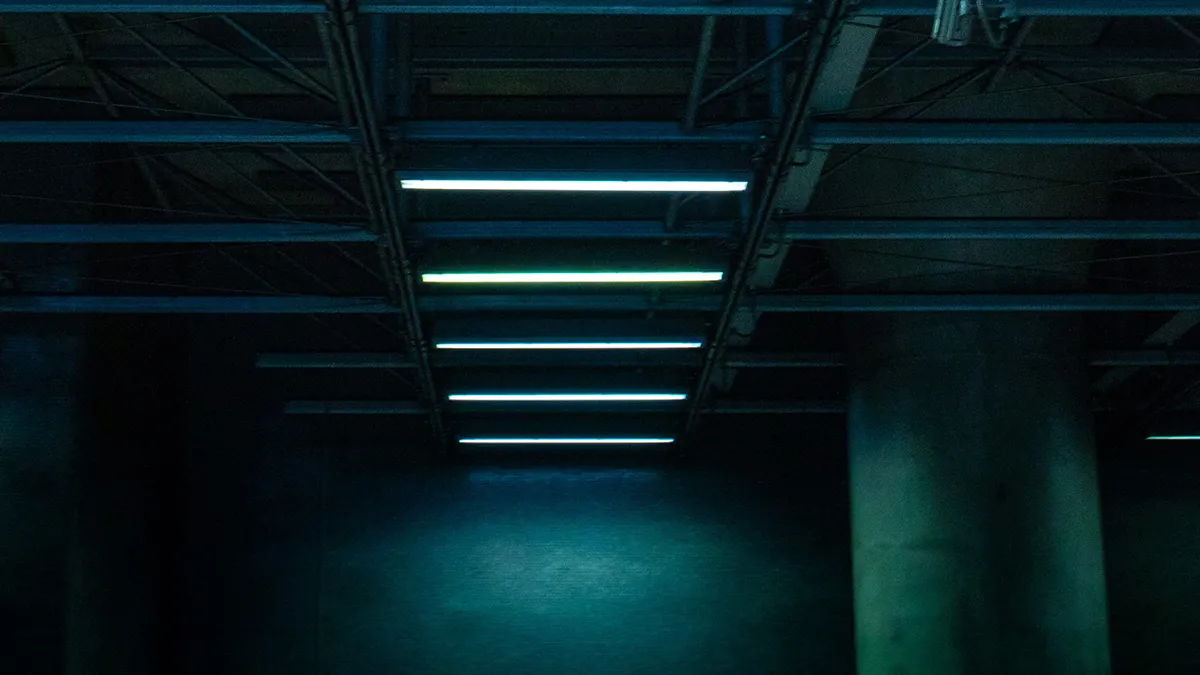
Walk into a petrochemical plant, a grain mill, or an offshore drilling platform, and you quickly realize that not all lighting is created equal. In environments where flammable gases, combustible dust, or volatile liquids are present, a standard LED fixture is not just inadequate — it is a potential ignition source. That is why explosion-proof LED lighting exists: purpose-built luminaires engineered to contain any internal spark or thermal event and prevent it from igniting the surrounding atmosphere.
This guide covers everything a facility manager, electrical engineer, or procurement specialist needs to know before selecting explosion-proof LED lights — from hazardous location classifications and certification marks to lumen output, mounting options, and total cost of ownership. By the end, you will have a clear framework for specifying the right fixture for your specific hazard class and operational demands.
What Makes a Location “Hazardous”?
A hazardous location (HazLoc) is any area where fire or explosion hazards may exist due to the presence of flammable gases, flammable liquid-produced vapors, combustible liquid-produced vapors, combustible dusts, or ignitable fibers. Three major classification systems govern how these zones are labeled and what equipment is permitted within them.
NEC Division System (North America)
The U.S. National Electrical Code (NEC) divides hazardous locations into Classes, Divisions, and Groups:
- Class I: Flammable gases or vapors (e.g., hydrogen, propane, acetylene)
- Class II: Combustible dust (e.g., grain dust, coal dust, metal dust)
- Class III: Ignitable fibers or flyings (e.g., cotton, rayon, hemp)
- Division 1: The hazardous material is present under normal operating conditions
- Division 2: The hazardous material is present only under abnormal conditions (equipment failure, accident)
Groups within each class further specify the type of material. For Class I, Group A covers acetylene; Group B covers hydrogen; Groups C and D cover propylene/ethylene and propane/natural gas respectively. For Class II, Groups E, F, and G address metal dusts, coal dusts, and grain/wood/plastic dusts.
IECEx / ATEX Zone System (International & European)
Outside North America, the IECEx (International) and ATEX (European Union) frameworks use a Zone-based classification:
- Zone 0: Explosive gas atmosphere present continuously or for long periods (equivalent to Class I, Div 1 extreme)
- Zone 1: Explosive gas atmosphere likely during normal operation (Class I, Div 1)
- Zone 2: Explosive gas atmosphere not likely, but possible under abnormal conditions (Class I, Div 2)
- Zone 20 / 21 / 22: Comparable zones for combustible dust environments
Understanding which classification applies to your facility is the starting point for every explosion-proof LED specification decision.
How Explosion-Proof LED Fixtures Work
The term “explosion-proof” does not mean the fixture can withstand an external explosion. It means the fixture is designed so that if an internal explosion occurs — caused by a spark within the housing — the flame and pressure cannot propagate outward to ignite the surrounding atmosphere.
This is achieved through several engineering principles:
Flameproof Enclosures (Ex d)
The most common protection method for LED fixtures in Class I environments. The housing is built to withstand the pressure of an internal explosion, and all joints and gaps are machined to precise flame path lengths that cool any escaping gases below ignition temperature before they reach the outside atmosphere.
Increased Safety (Ex e)
This method avoids sparks and hot surfaces altogether by applying additional measures — tighter manufacturing tolerances, reduced operating temperatures, and robust terminal designs — to standard equipment not normally capable of producing ignition sources.
Intrinsic Safety (Ex i)
Used primarily for instrumentation and control circuits, intrinsic safety limits electrical energy to levels too low to ignite a specific atmosphere. Rarely applied to high-output luminaires due to power constraints.
Purge and Pressurization (Ex p)
The fixture enclosure is pressurized with clean air or inert gas, preventing the hazardous atmosphere from entering. Often used for large control panels and occasionally for specialty luminaires in Zone 1 applications.
Key Certifications for Explosion-Proof LED Lights
No explosion-proof LED fixture should be installed without appropriate certification. The following marks are the most commonly required:
UL 844 (North America)
Underwriters Laboratories Standard 844 covers electric lighting fixtures for use in hazardous locations. A UL 844 listing confirms the fixture has been tested and certified for its stated Class, Division, Group, and Temperature Code (T-Code). Look for the UL Mark along with the specific hazardous location designation stamped on the fixture label.
ATEX Directive (EU / UK)
ATEX certification is mandatory for equipment installed in European hazardous zones. The ATEX mark consists of a hexagon containing the CE mark plus the specific Ex symbol, equipment category, and gas group. ATEX 114 (formerly ATEX 94/9/EC) covers equipment and protective systems.
IECEx Certification
The International Electrotechnical Commission’s IECEx scheme is recognized in over 55 countries. An IECEx certificate provides a globally accepted proof of compliance and is increasingly required for oil and gas projects in the Middle East, Australia, and Asia-Pacific.
INMETRO (Brazil) and CNEX (China)
Large industrial markets maintain their own schemes. Brazil requires INMETRO certification; China requires CNEX (CCC Ex) certification for explosion-proof equipment. Global manufacturers with these marks simplify multi-country procurement.
Temperature Codes (T-Code)
Beyond the zone/division classification, every explosion-proof fixture carries a T-Code indicating the maximum surface temperature of the fixture. The T-Code must be lower than the auto-ignition temperature of the specific substance present:
- T1: 450 degrees C maximum surface temp
- T2: 300 degrees C
- T3: 200 degrees C
- T4: 135 degrees C
- T5: 100 degrees C
- T6: 85 degrees C
For example, a facility handling diethyl ether (auto-ignition temperature 160 degrees C) must use fixtures rated T4 or higher (T4 through T6), not T3.
Why LED Technology Is Now Preferred in Hazardous Locations
For decades, high-pressure sodium (HPS) and metal halide (MHI) fixtures dominated hazardous location lighting. LED technology has reversed this preference decisively over the last several years, driven by three factors: thermal advantages, efficiency, and maintenance reduction.
Lower Operating Temperature
Traditional HPS and MHI lamps generate substantial radiant heat. Managing T-Code compliance required larger, heavier fixtures with elaborate thermal design. Modern industrial LED arrays run cooler, making it easier to achieve T4, T5, or even T6 ratings without adding bulk — an important advantage in tight machinery spaces and offshore installations.
Energy Efficiency: 50-70% Reduction
A 100-watt LED high bay in a hazardous location typically replaces a 250-watt HPS equivalent. Across a facility running 6,000 annual operating hours, that is 900 kWh of savings per fixture per year. For a 200-fixture installation, the annual energy saving exceeds 180,000 kWh — enough to fund the entire fixture replacement in under three years.
Extended Lamp Life: 50,000-100,000 Hours
Replacing lamps in hazardous locations is expensive and risky. Every lamp change in a Class I, Division 1 area requires hot-work permits, gas monitoring, and specialized labor. LED fixtures with 50,000-100,000 hour rated lifetimes dramatically reduce these maintenance events. Some facilities report going from quarterly lamp replacements to a single luminaire replacement every 10-15 years.
Instant-On Operation
HPS lamps require a 3-5 minute warm-up before reaching full output, and restrike takes another 15-20 minutes after a power interruption. LEDs reach full output instantly. In an emergency or process upset requiring evacuation, immediate full illumination is not a convenience — it is a safety requirement.
Selecting the Right Explosion-Proof LED Fixture: 7 Specification Criteria
1. Verify the Exact Classification and Zone
Before issuing a specification, confirm the precise Class/Division/Group or Zone/Gas Group for every area to be lit. This information comes from the facility’s area classification drawing, which should be maintained by the electrical engineering team. Do not rely on informal descriptions like “the flammable gas area” — get the exact NEC or IECEx designation in writing.
2. Calculate Required Lumen Output
Use the maintained illuminance method. Determine the required footcandles (or lux) at the task plane, the mounting height, and the planned maintenance factor (typically 0.70-0.80 for LED). Industrial areas typically require:
- General manufacturing: 30-50 footcandles (300-500 lux)
- Fine assembly or inspection: 50-100 footcandles (500-1000 lux)
- Outdoor hazardous areas (flare stacks, tank farms): 2-10 footcandles (20-100 lux)
An LED explosion-proof linear high bay rated at 25,000 lumens at 150W typically provides 50 footcandles at 25 feet mounting height in a spacing-to-mounting-height ratio of 1.5:1.
3. Match the T-Code to the Substance’s Auto-Ignition Temperature
Consult the Safety Data Sheet (SDS) for every substance present in the area. Use the lowest auto-ignition temperature found. Select a fixture whose T-Code maximum surface temperature is below that value. When multiple substances are present, design to the lowest auto-ignition temperature.
4. Evaluate Ingress Protection (IP) Rating
Most hazardous locations involve not just flammable atmospheres but also process environments with moisture, dust, chemicals, or wash-down procedures. An explosion-proof rating does not automatically mean the fixture is suitable for wet locations. Look for IP66 or IP67 ratings for outdoor, coastal, or wash-down environments. IP66 means protection against powerful water jets; IP67 means the fixture can be temporarily submerged.
5. Consider Corrosion Resistance
Offshore, chemical processing, and wastewater facilities expose fixtures to corrosive atmospheres. Aluminum housings may oxidize; stainless steel or GRP (glass-reinforced polyester) fixtures offer superior corrosion resistance. Salt spray ratings (tested to IEC 60068-2-52 or ASTM B117) provide a quantifiable benchmark for marine and coastal environments.
6. Evaluate Vibration and Shock Ratings
Mining equipment, compressor stations, and heavy manufacturing introduce vibration levels that can loosen connections or damage optical assemblies. Specify fixtures tested to relevant vibration standards (IEC 60068-2-6 or MIL-STD-810) when compressors, vibrating screens, or other high-vibration equipment are nearby.
7. Plan the Mounting and Wiring Configuration
Explosion-proof conduit entries (typically via threaded NPT or metric conduit hubs) must match the facility’s conduit system. Surface-mount, pendant, and wall-mount configurations are available. Confirm the fixture’s conduit entry thread type and size before ordering to avoid field modifications, which can void the certification.
Explosion-Proof LED Lighting by Industry
Oil and Gas (Upstream, Midstream, Downstream)
Drilling platforms, pump stations, tank farms, and refineries represent the highest-stakes hazardous location lighting applications. Zone 1 / Class I, Division 1 fixtures with T4 or T5 ratings are standard. Marine-rated stainless steel or GRP enclosures are typically required. Many operators also specify ATEX + IECEx dual certification to simplify global procurement.
Chemical and Petrochemical Processing
Process areas handling solvents, acids, and flammable intermediates may present multiple hazard types simultaneously. Specifiers must address both the flammable vapor classification (Class I or Zone 1/2) and potential chemical corrosion. Polycarbonate or borosilicate glass lenses resist chemical splash better than standard acrylic.
Grain and Feed Mills
Class II, Division 1 and Division 2 environments are common in grain handling facilities. The primary risk is combustible dust (Group G), which can form explosive clouds during loading, conveying, and grinding operations. Linear LED fixtures designed for dust-tight (IP6X) installations and rated for Class II, Div 1 environments are replacing older metal halide installations in grain elevators across the U.S. Midwest.
Pharmaceutical Manufacturing
Solvent-based pharmaceutical processes create Class I environments in mixing rooms, filling areas, and spray-drying zones. Additionally, pharmaceutical facilities have strict cleanroom requirements. Explosion-proof LED troffers and linear fixtures with smooth, cleanable surfaces, IP65 ratings, and Class I, Division 1 or Zone 1 certification address both the flammable atmosphere and contamination control requirements simultaneously.
Wastewater Treatment
Pump stations, sludge-handling facilities, and enclosed aeration basins can accumulate methane, hydrogen sulfide, and other flammable gases. Class I, Division 1 fixtures are typically required in enclosed wet wells and pump vaults. The combination of flammable gas classification and high-moisture/corrosive environment makes IP66/IP67 and corrosion-resistant housings essential.
Mining and Tunneling
Underground coal mines have specific MSHA (Mine Safety and Health Administration) permissibility requirements in the U.S. LED fixtures approved under MSHA 30 CFR Part 18 are required in gassy mines. Surface mining operations handling coal or mineral dusts fall under Class II classifications and require dust-tight LED fixtures rated for the specific dust group.
Explosion-Proof LED vs. Intrinsically Safe Lighting: When to Use Each
Procurement teams sometimes confuse explosion-proof (Ex d, flameproof) with intrinsically safe (Ex i) equipment. These are fundamentally different protection concepts:
- Explosion-proof (Ex d): Contains an internal ignition. Used for high-power luminaires, motor starters, junction boxes. The dominant choice for general area lighting.
- Intrinsically safe (Ex i): Prevents ignition by limiting energy. Used for sensors, instruments, handheld devices, and portable lighting (headlamps, task lights). Not practical for high-output area lighting due to severe power limitations.
For general area lighting in Class I, Division 1 or Zone 1 environments, explosion-proof LED luminaires are the correct specification. Intrinsically safe portable LED lights (headlamps, inspection lights) complement them for maintenance and inspection tasks.
Understanding the Total Cost of Ownership
Explosion-proof LED fixtures carry a premium purchase price compared to standard industrial LEDs — typically 2 to 4 times higher per fixture. Purchasing managers focused solely on initial cost often push back on this premium. The TCO calculation usually tells a different story.
Consider a 300-fixture Class I, Division 1 installation replacing 250W HPS fixtures with 100W explosion-proof LEDs:
- Energy savings per year: 300 fixtures x 150W savings x 6,000 hours = 270,000 kWh x $0.12/kWh = $32,400/year
- Lamp replacement savings per year: HPS lamps at 24,000-hour life require replacement every 4 years. With hot-work permits and labor at $250/lamp change, 300 fixtures saves $75,000 in maintenance over 10 years = $7,500/year
- Total annual savings: approximately $39,900/year
- Premium cost for explosion-proof LED over standard industrial LED: approximately $150/fixture x 300 = $45,000
- Payback on the explosion-proof LED premium: under 14 months
When the full 10-year analysis is run against the HPS baseline, the explosion-proof LED installation typically delivers 60-75% lower total cost of ownership.
Installation Best Practices
Even the best-certified fixture becomes a liability if improperly installed. Follow these installation principles to maintain certification validity and operational safety:
- Use certified conduit seals: NEC Article 501.15 requires conduit seals within 18 inches of explosion-proof enclosures in Division 1 areas. Do not skip this step; it is both a code requirement and a critical safety measure.
- Do not modify the fixture: Drilling additional holes, changing lens materials, or modifying wiring entries voids the UL/ATEX/IECEx certification. Any field modification requires re-testing.
- Verify torque on threaded entries: Threaded conduit hubs and covers must be engaged to their full thread depth. Partially engaged threads can create a flame path that does not meet the certification criteria.
- Follow mounting torque specifications: Overhead fixtures require mounting hardware torqued to manufacturer specifications. Under-torqued pendant fixtures in high-vibration environments can loosen over time.
- Inspect lamp covers and gaskets before service: Borosilicate glass globes and silicone gaskets must be undamaged to maintain IP and explosion-proof integrity. Replace any cracked glass immediately — operating with a cracked lens invalidates the certification.
Maintenance and Inspection Schedule
IEC 60079-17 provides detailed guidance for the inspection and maintenance of electrical installations in hazardous areas. A practical maintenance schedule for explosion-proof LED fixtures should include:
- Monthly visual inspection: Check for visible damage, cracked glass, corrosion, and conduit seal integrity.
- Annual detailed inspection: Clean lenses (dust accumulation can reduce output 10-20% and increase surface temperature), check all fasteners and conduit entries, test emergency functions if equipped, verify T-Code compliance by comparing fixture surface temperature with a calibrated thermometer.
- 5-year or milestone inspection: Full inspection per IEC 60079-17, including electrical testing of insulation resistance and grounding continuity.
Maintaining an up-to-date explosion-proof equipment register — listing every fixture’s certification, installation date, location, and inspection history — simplifies compliance audits and insurance reviews.
Recolux Explosion-Proof LED Solutions
Recolux designs and manufactures explosion-proof LED luminaires for Class I Division 1 and 2, Class II Division 1 and 2, Zone 1, Zone 2, Zone 21, and Zone 22 applications. Our HazLoc LED lineup includes:
- ExLED High Bay Series: 100W-300W output, UL 844 listed, IP66 rated, T4 T-Code, available in NPT and metric conduit entries. Designed for 20-50 foot mounting heights in petrochemical plants, tank farms, and offshore platforms.
- ExLED Linear Series: Vapor-tight linear LED for Class I Div 2 / Zone 2 applications. Suitable for pharmaceutical clean rooms, food processing areas, and paint spray booths requiring a flush, cleanable profile.
- ExLED Wall Pack: 40W-80W wall-mount units for outdoor hazardous perimeters, pipeline compressor stations, and tank battery enclosures. Rated for -40 degrees C to +60 degrees C operation.
All Recolux explosion-proof fixtures ship with full certification documentation, installation drawings, and photometric data files (IES) for lighting simulation. Contact our HazLoc specification team for application-specific recommendations and custom mounting configurations.
Часто задаваемые вопросы
Q: Can I use a standard weatherproof LED fixture in a Division 2 area?
A: No. A standard weatherproof (wet location listed) LED fixture is not certified for use in hazardous locations. Class I, Division 2 requires fixtures specifically listed and labeled for Class I, Div 2 (or Zone 2). The difference is the sealing and construction method that prevents ignition of flammable gases present under abnormal conditions.
Q: What is the difference between Class I Div 1 and Class I Div 2 for LED lighting selection?
A: Division 1 means the hazardous atmosphere is present under normal operating conditions — the fixture must be fully flameproof (Ex d) and contain any internal arc. Division 2 means the hazard is only present under abnormal conditions; fixtures must prevent sparks from reaching the atmosphere but need not contain a full internal explosion. Division 2 fixtures are less costly and slightly less restrictive to install.
Q: How long do explosion-proof LED fixtures typically last?
A: Quality explosion-proof LED luminaires are rated for 50,000 to 100,000 hours of L70 life (the point at which output drops to 70% of initial). At 6,000 operating hours per year, that is 8 to 16 years before a luminaire replacement. The mechanical housing and explosion-proof enclosure can last 20-30 years with proper maintenance.
Q: Are explosion-proof LED fixtures dimmable?
A: Yes, many modern explosion-proof LED fixtures support 0-10V dimming or DALI control. The dimming interface must itself be rated for the hazardous zone, or installed in a safe area with appropriately rated field wiring. Occupancy sensing and daylight harvesting are increasingly being integrated into hazardous location LED systems, particularly in Zone 2 / Division 2 areas where the lower cost of controls wiring makes automation economically attractive.
Q: What documentation do I need for an explosion-proof LED installation?
A: You need the fixture’s certification certificate (UL listing document, ATEX certificate, or IECEx certificate), the area classification drawing for the installation site, the applicable installation standard (NEC Article 501/502/503 for North America; EN 60079-14 for Europe), and the fixture manufacturer’s installation instructions. Keep all documentation on file for insurance audits, regulatory inspections, and future maintenance reference.
Q: Can explosion-proof LED fixtures be used in cold storage or freezer warehouses?
A: Cold storage environments are generally not classified as hazardous locations unless ammonia refrigerant is present in quantities sufficient to create a flammable atmosphere (ammonia is Class I, Group D above 15% concentration in air). Standard cold-storage LED fixtures rated for low-temperature operation (down to -40 degrees C) are typically appropriate for freezer warehouses. If the facility uses ammonia refrigeration with potential leak zones, consult with a certified electrical engineer to determine if hazardous location classification applies.
Conclusion: Specification Discipline Pays Off in Hazardous Locations
Explosion-proof LED lighting sits at the intersection of electrical engineering, process safety, and energy management. Getting it right requires more than selecting a fixture with the right wattage — it demands verification of the exact hazardous area classification, matching T-Codes to substance auto-ignition temperatures, confirming certifications are current and applicable, and following installation procedures that preserve certification validity.
The good news is that modern explosion-proof LED technology has made this work more accessible than ever. Fixtures that once required complex maintenance programs and delivered poor light quality now run cool, last decades, and deliver the full benefits of LED efficiency even in the most demanding process environments. For facilities still operating HPS or metal halide fixtures in hazardous zones, the energy savings and maintenance reduction from an LED retrofit are substantial enough to fund the project from operational budgets alone — no capital approval required in many cases.
If you are specifying explosion-proof LED lighting for a new facility, a retrofit project, or a maintenance replacement program, explore Recolux’s industrial LED high bay range или browse our full industrial LED lighting portfolio to find certified, application-matched solutions for your hazardous location requirements.
 English
 Spanish
 French
 German
 Arabic
 Russian