
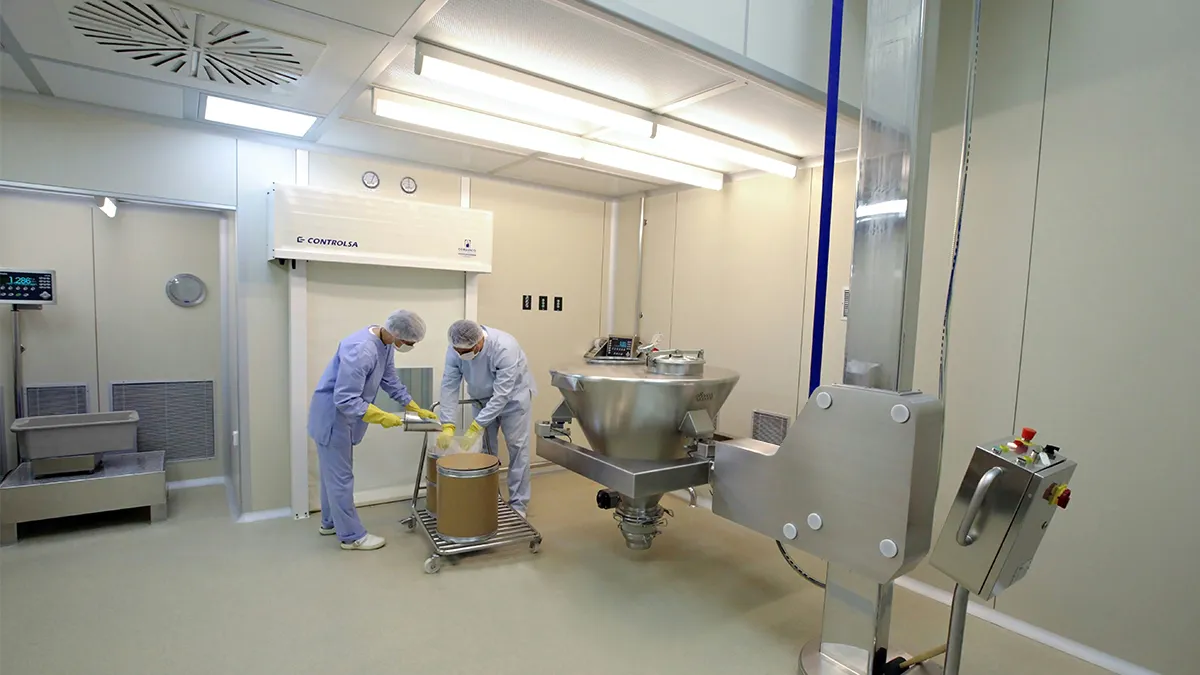
Walk onto almost any factory floor or warehouse built before 2015, and chances are you will notice it before you hear the machinery — that subtle, pulsing rhythm in the overhead lights. It is not always visible to the naked eye, but your eyes feel it. After a few hours under those fixtures, the headaches start. Your concentration drifts. Fine-detail tasks become harder to perform accurately. What you are experiencing is light flicker, and in industrial environments, it is a far bigger problem than most facility managers realize.
This article breaks down what causes flicker in industrial lighting, why it matters for worker health and operational efficiency, how to measure it, and what to look for when specifying flicker-free LED fixtures for your facility.
What Is Light Flicker?
Light flicker refers to rapid, repeated variations in light intensity — brightening and dimming that can occur dozens or hundreds of times per second. It is not the same as a bulb burning out or a loose connection causing intermittent shutdowns. Flicker is a steady, rhythmic fluctuation embedded in the light output itself.
Flicker has two primary characteristics that matter:
- Frequency: How many times per second the light cycles (measured in Hertz, Hz). Mains-powered lighting in North America flickers at 120 Hz (twice the 60 Hz electrical frequency), while in Europe and most of Asia it is 100 Hz (twice 50 Hz).
- Percent Flicker (Modulation Depth): The difference between maximum and minimum light output, expressed as a percentage. A light that drops from 100% brightness to 60% and back has 40% flicker.
These two factors together determine whether flicker is perceptible (you can see it), imperceptible but still biologically active (your brain detects it even if your eyes do not), or negligible.
Why Flicker Matters in Industrial Settings
Office workers may complain about flicker, but industrial environments create conditions that make flicker significantly more harmful:
Proximity to Moving Machinery
When rotating machinery (conveyor belts, lathes, fans, turbines) operates at speeds that synchronize with the flicker frequency, the machinery can appear stationary or moving slowly — a phenomenon called the stroboscopic effect. This creates serious safety hazards. A worker might reach into what looks like a stopped machine that is actually running at full speed, or misjudge the speed of a moving part.
The IEEE PAR1789 standard specifically flags this risk for industrial applications, noting that stroboscopic effects can cause “motion-related misperception” even at flicker levels below the visibility threshold.
Extended Exposure Duration
Industrial shifts run 8 to 12 hours. Research published in Lighting Research & Technology (Wilkins et al., 2010) found that even imperceptible flicker at 100 Hz caused measurable increases in headache frequency, eye strain, and visual fatigue after sustained exposure exceeding two hours. In a 10-hour shift, the cumulative effect is substantial.
High-Precision Task Requirements
Quality inspection, soldering, textile sorting, automotive assembly, and pharmaceutical packaging all demand sustained visual acuity. Studies from the Lighting Research Center at Rensselaer Polytechnic Institute have shown that flicker at modulation depths above 10% reduces task performance on visually demanding work by 8–15%, even when workers do not consciously notice the flicker.
Common Sources of Flicker in Industrial Lighting
Legacy Lighting Technologies
Older lighting technologies are the primary culprits:
- Magnetic-ballast fluorescent lamps: These operate at the mains frequency and typically produce flicker in the 30–50% modulation range. Double-lamp fixtures with lead-lag ballasts can reduce perceptible flicker but do not eliminate stroboscopic effects.
- High-intensity discharge (HID) lamps: Metal halide and high-pressure sodium fixtures driven by magnetic ballasts produce flicker that can exceed 50% modulation at startup and during warm-up cycles. As the lamp ages, flicker typically worsens.
- Electromagnetic ballasts in general: Any lighting system that depends on the alternating current waveform for regulation will inherit the mains frequency as a flicker component.
LED Drivers — The Hidden Variable
LEDs themselves do not flicker. The solid-state junction emits steady light when driven by constant current. The flicker comes from the driver (also called the power supply or transformer) that converts AC mains power to the DC power LEDs require.
There are two main driver architectures, and the difference in flicker performance is dramatic:
1. Pulse-Width Modulation (PWM) Dimming Drivers
PWM drivers control brightness by rapidly switching the LED on and off. The ratio of on-time to off-time determines the perceived brightness. At 50% dimming, the LED is off half the time. If the switching frequency is low (below a few hundred Hz), this creates significant flicker.
Cheap LED drivers use PWM frequencies as low as 100–200 Hz with modulation depths of 80–100%. These products meet basic safety standards but perform poorly on any meaningful flicker metric.
2. Constant-Current Reduction (CCR) / Analog Drivers
CCR drivers reduce brightness by lowering the current flowing through the LED, not by switching it on and off. This produces essentially flicker-free output at any dimming level. High-quality industrial LED fixtures almost universally use CCR topology.
The trade-off? CCR drivers cost more — typically 15–30% more than equivalent PWM units. In a facility with 500 fixtures, that adds up. But as this article will show, the ROI argument is clear when you factor in health and productivity costs.
Health and Performance Effects — What the Research Shows
The scientific literature on flicker effects has grown substantially over the past decade. Here is a summary of the most relevant findings for industrial applications:
Headaches and Migraines
A 2016 study in Epilepsia found that exposure to light with >30% flicker modulation at 100 Hz triggered headaches in 18% of the general population and 40% of migraine sufferers within 30 minutes. For an industrial workforce, that translates to measurable sick-day costs and reduced output.
Visual Fatigue and Eye Strain
The previously mentioned Wilkins study (2010) demonstrated that imperceptible 100 Hz flicker caused significant increases in ocular discomfort, including sore eyes, blurred vision, and difficulty focusing. The effect scaled with exposure time — peaking between 2 and 4 hours.
Neurological Effects
Even when flicker is below the visibility threshold, the retina still detects the modulation and sends signals to the visual cortex. EEG studies have shown that flicker at 100–200 Hz produces measurable cortical responses even when subjects report seeing nothing unusual. This “invisible” neural load contributes to fatigue and reduces cognitive performance over time.
Seizure Risk
For a small percentage of the population (approximately 3%), flicker in the 15–70 Hz range can trigger epileptic seizures. While industrial lighting rarely operates in this frequency range, startup flicker from aging HID lamps or poorly designed emergency lighting inverters can dip into this zone momentarily.
How to Measure Flicker
Before you can fix a flicker problem, you need to quantify it. Three key metrics are used in professional lighting measurement:
Percent Flicker (Flicker Modulation)
Formula: ((Max light output – Min light output) / (Max + Min)) × 100
This is the most basic metric. Lower is better. Values below 5% are generally considered imperceptible. Values above 10% may cause complaints.
Flicker Index (IEEE)
Formula: Area above average light output / Total area under the light waveform
This metric accounts for the waveform shape, not just the peaks. A square-wave PWM signal and a sinusoidal signal with the same percent flicker will have different flicker indices. Values range from 0 (no flicker) to 1 (maximum flicker).
Short-Term Flicker Indicator (Pst LM)
Defined in IEC 61000-4-15, this metric is commonly used in European standards and accounts for how the human visual system perceives flicker at different frequencies. Values below 1.0 are generally acceptable.
Measurement Tools
Professional flicker meters (such as the WaveForming Flicker 2000 or the Haas LM-200) cost between $500 and $3,000. For quick field assessments, a high-speed camera (shooting at 1000+ fps) paired with analysis software can reveal flicker that is invisible to the naked eye. Several smartphone apps also exist, though their accuracy is limited by phone camera hardware.
Standards and Guidelines for Flicker in Industrial Lighting
Several organizations have established thresholds for acceptable flicker levels:
| Standard / Guideline | Key Threshold | Scope |
|---|---|---|
| IEEE PAR1789 (2021 revision) | <10% flicker recommended for low-risk; <1% for high-risk environments | General lighting health effects |
| ENERGY STAR (Luminaires V2.1) | Flicker index <0.18 at all dimming levels | Residential and commercial |
| DLC Premium (V5.1) | <10% flicker at 100 Hz and above; <1% at below 100 Hz | Commercial and industrial |
| California Title 24 (JA8 2026) | <30% flicker at 120 Hz; <10% flicker at 90 Hz | California building code |
| IEC 62722-2-1 (LED module performance) | Manufacturer-declared flicker data required | International LED modules |
For industrial buyers, the DLC Premium threshold is the most practical benchmark. Any fixture on the DLC Premium Qualified Products List (QPL) has been tested and verified to meet flicker requirements under standard operating conditions.
Specifying Flicker-Free LED Fixtures: A Practical Checklist
When evaluating LED fixtures for an industrial retrofit or new build, here is what to ask manufacturers and check on spec sheets:
1. Driver Quality Above All Else
The driver determines 90% of a fixture’s flicker performance. Look for drivers from reputable manufacturers — Mean Well, Inventronics, MOSO, and Tridonic are widely used in quality industrial LED products. Avoid unspecified or “generic” drivers.
Specifically, request constant-current reduction (CCR) type drivers, not PWM drivers. If the manufacturer cannot tell you which topology the driver uses, that is a red flag.
2. Demand Actual Flicker Test Data
Do not accept “flicker-free” as a marketing claim without supporting data. Request either:
- A flicker waveform graph showing the light output over time at 100% and at the lowest dimming level
- Percent flicker and flicker index values measured per IEEE 1789 methodology
- Third-party test reports from recognized labs (UL, Intertek, SGS)
Acceptable targets for industrial use: <5% percent flicker and <0.05 flicker index at all operating levels.
3. Check DLC QPL Listings
Fixtures on the DLC Premium QPL have been independently verified for flicker performance. Search the DLC product database (designlights.org) and check the “Flicker” column. This is the fastest way to shortlist compliant products.
4. Consider Dimming Compatibility
If your facility uses 0-10V dimming, DALI, or other control protocols, verify that the fixture maintains low flicker across the entire dimming range, not just at 100% output. Many fixtures perform well at full power but develop significant flicker below 30% output.
Ask the manufacturer for flicker data at 100%, 50%, 20%, and 10% dimming levels.
5. Evaluate Emergency and Backup Lighting
Emergency LED fixtures that switch to battery power often use different driver circuits than normal operation mode. These backup drivers are more likely to produce flicker because they prioritize runtime over light quality. Test emergency mode flicker separately if your facility has extended backup requirements.
6. Factor in Ambient Temperature
Driver performance varies with temperature. Industrial environments — especially foundries, steel mills, and non-climate-controlled warehouses — can reach 40–50°C ambient. At elevated temperatures, driver components may drift out of specification, increasing flicker. Check the rated operating temperature range and request thermal test data if your facility runs hot.
LED Fixture Technologies That Minimize Flicker
Beyond choosing the right driver, several fixture-level design choices contribute to low flicker performance:
High-Frequency PWM (>25 kHz)
If a fixture does use PWM dimming (common in some network-controlled systems like DALI or DMX512), the flicker frequency should be well above the biological detection threshold. PWM at 25 kHz or higher is imperceptible to humans and does not produce the neurological effects associated with lower-frequency PWM.
For reference: the biological detection limit for flicker is approximately 500 Hz for the retina and 100–200 Hz for cortical effects. At 25 kHz, the modulation is effectively invisible to the visual system.
Active Power Factor Correction (PFC)
Drivers with active PFC maintain smoother DC output by continuously adjusting the input current waveform. This reduces ripple on the DC bus, which translates to more stable LED current and lower flicker. Active PFC is standard on quality industrial drivers but may be absent from budget alternatives.
Film-Capacitor Output Stages
Some high-end drivers use large film capacitors on the output stage to filter residual ripple. This adds cost and physical size but can reduce flicker modulation below 1%. For environments where workers perform extremely precise visual tasks (semiconductor fabrication, watchmaking, surgical suites), this level of performance may be justified.
Flicker in Retrofit Scenarios: Common Pitfalls
Many facility managers discover flicker problems only after a retrofit, when the new LED tubes or retrofit kits are installed. Here are the most common failure modes:
Retrofit LED Tubes with External Drivers
Type A (direct wire) LED tubes that operate on existing fluorescent ballasts are the most problematic. The fluorescent ballast was designed to drive a fluorescent tube, not an LED. The resulting mismatch often creates severe flicker (30–60% modulation) and can reduce the LED tube’s rated life by 50% or more.
If you must retain existing ballasts, specify Type A tubes that have been tested and listed as compatible with your specific ballast model. Better yet, bypass the ballast entirely (Type B installation) and use the fixture with an external LED driver.
Mixed Fixture Types on the Same Circuit
When some fixtures on a circuit are upgraded to LED while others remain on HID or fluorescent, the different flicker profiles can interact and produce “beat frequencies” — a lower-frequency pulsing that is more visible and annoying than either source alone. Aim to complete circuit-level upgrades rather than piecemeal fixture swaps.
Dimming Control Mismatches
Not all LED fixtures are compatible with all dimming protocols. Connecting a 0-10V dimmable fixture to a DALI controller (or vice versa) can cause the driver to operate outside its design parameters, resulting in flicker, buzzing, or failure. Always verify control compatibility before specifying.
The Cost Argument: Why Low-Flicker Fixtures Pay for Themselves
The premium for flicker-free LED fixtures over budget alternatives typically ranges from $5 to $15 per fixture. For a 500-fixture warehouse, that is $2,500 to $7,500 additional upfront. But consider the offsetting factors:
Reduced Absenteeism
If flicker-related headaches and eye strain cause even 1% of your workforce to take an additional sick day per quarter, the cost adds up fast. For a facility with 200 workers earning an average of $25/hour, one extra sick day per quarter per affected worker costs roughly $20,000 annually in lost labor (assuming 10% of workers are affected).
Lower Error and Rework Rates
In quality inspection and assembly operations, visual fatigue directly correlates with error rates. A 5% reduction in defect rate on a line producing 10,000 units per month with a $2 rework cost per defect saves $12,000 per year.
Safety Compliance
OSHA’s General Duty Clause requires employers to provide a workplace “free from recognized hazards.” While there is no specific OSHA flicker standard yet, the stroboscopic effect is a recognized hazard in machinery environments. A documented flicker assessment and fixture upgrade creates a defensible safety record.
Rebate Eligibility
Many utility rebate programs require DLC Premium certification, which includes flicker limits. Specifying compliant fixtures unlocks rebates that typically cover 30–50% of fixture costs, more than offsetting any flicker-free premium.
A conservative estimate for a mid-size facility (200 workers, 500 fixtures): total annual savings from reduced absenteeism, lower error rates, and energy efficiency improvements range from $30,000 to $50,000. The flicker-free fixture premium pays for itself within 3 to 6 months.
Industry Applications and Special Considerations
Manufacturing and Assembly
Facilities performing precision assembly, soldering, or visual inspection should target <1% flicker modulation. Workers in these environments stare at fine details for hours — even subtle flicker causes measurable fatigue. Consider fixtures with film-capacitor output stages for the most demanding stations.
Almacenamiento y logística
For general warehouse areas where workers move between zones (picking, packing, shipping), flicker below 5% is typically sufficient. The primary concern here is the stroboscopic effect around conveyor systems and forklift operations. Ensure that any overhead fixtures above moving machinery maintain low flicker at all times.
Food Processing
Flicker interacts with the inspection of food products for color consistency, foreign matter detection, and packaging integrity. Many food processing companies now specify <2% flicker as a standard requirement, particularly in areas where USDA or FDA inspectors conduct visual checks.
Mining and Heavy Industry
Underground mining environments present unique challenges: extreme temperatures, vibration, and the need for explosion-rated fixtures. Flicker from aging HID fixtures has been identified as a contributing factor in mining accidents where rotating equipment appeared stationary. Many mining regulations now include flicker requirements for new installations.
Testing Your Existing Facility: A Step-by-Step Approach
If you are unsure whether your current lighting has a flicker problem, follow this process:
- Visual inspection: Turn on your phone camera and point it at the overhead fixtures. If you see banding or strobing on the camera screen (a rolling bar effect), the lighting has significant flicker. This is not a precision measurement, but it is a reliable pass/fail indicator.
- Worker survey: Ask your workforce whether they experience frequent headaches, eye strain, or visual fatigue during shifts. Cross-reference complaints with specific work zones and fixture types.
- Professional measurement: Hire a lighting consultant or use a dedicated flicker meter to measure percent flicker and flicker index at representative locations. Record values at full output and any dimmed levels used in normal operations.
- Compare against standards: Use the table above to benchmark your results against IEEE PAR1789, DLC Premium, and other relevant thresholds.
- Prioritize upgrades: Focus first on areas with high-value visual tasks, rotating machinery, and worker complaints. General circulation areas can be addressed in later phases.
Principales conclusiones
- Light flicker causes headaches, visual fatigue, and reduced task performance — effects that compound over 8–12 hour industrial shifts.
- The stroboscopic effect from flicker near rotating machinery creates genuine safety hazards in factories and warehouses.
- LEDs do not inherently flicker — the driver determines flicker performance. Constant-current reduction (CCR) drivers are far superior to PWM drivers.
- Specify fixtures with <5% percent flicker and <0.05 flicker index for general industrial use; <1% for precision task areas.
- DLC Premium certification provides independent verification of flicker performance — use the QPL as your first filter.
- The small upfront premium for flicker-free fixtures is recovered quickly through reduced absenteeism, lower error rates, utility rebates, and improved safety compliance.
Preguntas frecuentes
Can I see LED flicker with the naked eye?
Most quality LED fixtures produce flicker above 100 Hz, which is near the limit of human perception. You may see a subtle pulsing at 50–100 Hz, particularly in your peripheral vision. However, even if you cannot see it, imperceptible flicker above 100 Hz still causes neurological fatigue over time. The phone camera test is a more reliable detector than your eyes.
Do all dimmable LED fixtures flicker?
No. Fixtures using constant-current reduction dimming maintain flicker-free output across the entire dimming range. Fixtures using PWM dimming may flicker at low dimming levels if the PWM frequency is too low. Always request flicker data at multiple dimming levels before purchasing.
Is flicker covered by OSHA regulations?
There is no specific OSHA standard for flicker. However, the General Duty Clause (Section 5(a)(1)) requires employers to provide a workplace free from recognized hazards. Flicker-related stroboscopic effects near machinery and flicker-induced health complaints could both be cited under this clause. Several industry-specific standards (mining, food processing) do include explicit flicker requirements.
How does flicker in LED tubes compare to fluorescent tubes?
Quality LED tubes with built-in drivers typically produce <5% flicker, compared to 30–50% for magnetic-ballast fluorescent tubes. However, cheap LED retrofit tubes that operate on existing fluorescent ballasts can actually produce worse flicker than the original fluorescent lamps because of driver-ballast mismatch.
What is the difference between visible flicker and invisible flicker?
Visible flicker (typically below 70–100 Hz) can be seen as a pulsing or strobing effect. Invisible flicker (above 100 Hz) cannot be seen but is still detected by the retina and brain, causing fatigue and performance degradation over time. Invisible flicker is arguably more problematic in industrial settings because workers do not recognize it as the source of their discomfort and do not report it.