
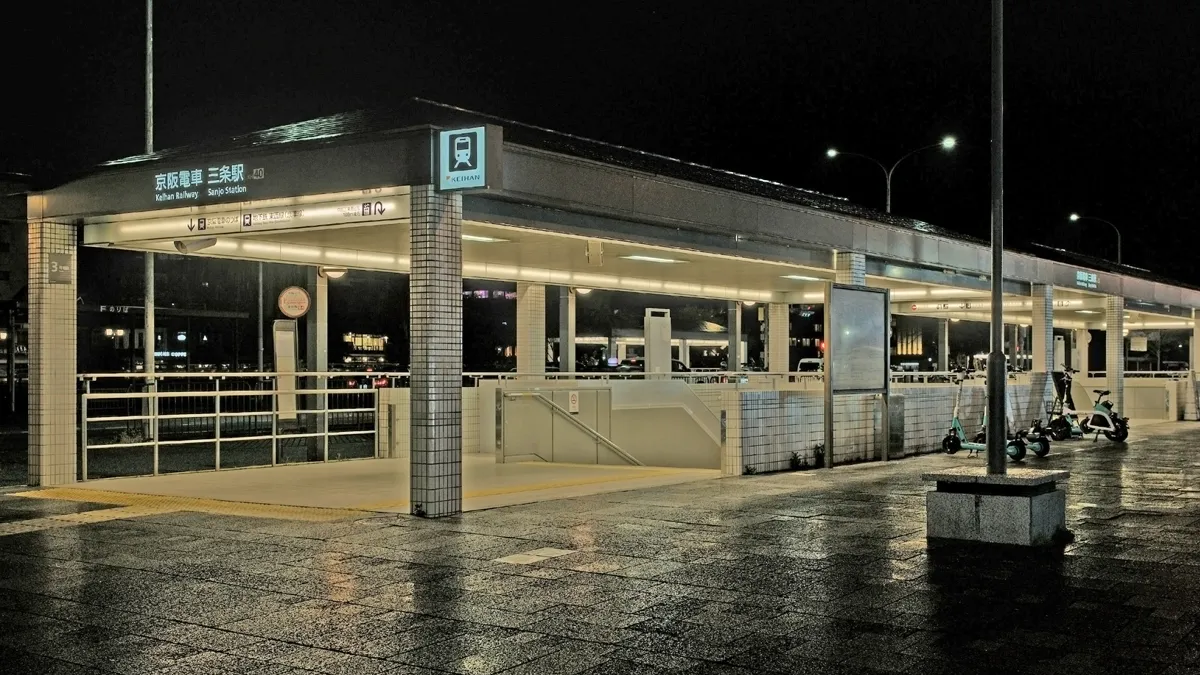
The Growing Importance of Outdoor LED Lighting
Outdoor LED lighting has transformed how commercial, municipal, and industrial facilities illuminate exterior spaces. From roadway lighting and parking lot illumination to building façade lighting and security applications, LED technology delivers superior energy efficiency, longer lifespan, and enhanced control capabilities compared to traditional HID (high-intensity discharge) and fluorescent alternatives.
This guide provides a comprehensive framework for selecting, specifying, and installing outdoor LED lighting systems that meet performance requirements, regulatory standards, and budget constraints.
Key Advantages of Outdoor LED Lighting
Energy Efficiency and Operating Cost Savings
Outdoor LED fixtures consume 50-70% less energy than equivalent HID fixtures. For municipalities and facility managers, this translates to substantial reductions in electricity budgets, often paying for the upgrade within 3-5 years through energy savings alone.
Longer Lifespan and Reduced Maintenance
Quality outdoor LED fixtures are rated for 50 000 - 100 000 часов of operation (L70/B50), compared to 15,000-24,000 hours for HID lamps. This reduces relamping frequency, bucket truck deployments, and disruption to facility operations.
Superior Light Quality and Uniformity
LEDs provide better color rendering (CRI 70-90), instant-on capability, and precise optical control. This results in improved visibility, enhanced safety, and reduced light pollution through full-cutoff optical designs.
Smart Controls Compatibility
Outdoor LED fixtures are inherently compatible with photocells, occupancy sensors, and networked control systems (DALI, Zhaga, NEMA sockets). This enables dimming, scheduling, and remote monitoring for additional energy savings and operational insights.
Types of Outdoor LED Lighting Fixtures
Area Lights (Parking Lot Lights)
Typical wattage: 100W-600W
Mounting: Pole-mounted (10-40 feet)
Applications: Parking lots, plazas, commercial building perimeters
Key specifications:
- Световой поток: 14,000-84,000 lumens
- Color temperature: 4000K-5000K (neutral to cool white)
- Distribution: Type III, IV, V (square, semicircular, circular)
- Certifications: DLC Premium, UL listed, IP65 minimum
Wall Packs
Typical wattage: 20W-200W
Mounting: Surface-mounted on building exterior walls
Applications: Building perimeters, entryways, loading docks, emergency exits
Types:
- Traditional wall pack: Forward-throw, rectangular form factor
- Slim wall pack: Low-profile, modern aesthetic
- Full-cutoff wall pack: Dark-sky compliant, zero uplight
Flood Lights
Typical wattage: 50W-1000W+
Mounting: Adjustable bracket, pole, wall, or ground stake
Applications: Façade illumination, sign lighting, landscape accent, sports fields
Beam angle options:
- Narrow spot (10°-25°): Long-distance targeting, flagpoles, signage
- Medium flood (25°-60°): Façade washing, billboard lighting
- Wide flood (60°-120°): General area illumination
Street and Roadway Lights
Typical wattage: 30W-300W
Mounting: Street pole (20-40 feet)
Applications: Roadways, highways, residential streets, bike paths
Key considerations:
- Full-cutoff optics: Minimize glare and light trespass (BUG rating)
- Color temperature: 3000K-4000K preferred for residential areas to reduce sky glow
- Dimming compatibility: DALI, 0-10V, or NEMA 7-pin photocell
Landscape and Pathway Lights
Typical wattage: 3W-36W
Mounting: In-ground, bollard, or pathway stake
Applications: Pedestrian walkways, gardens, building perimeters, steps
Canopy and Soffit Lights
Typical wattage: 20W-100W
Mounting: Recessed or surface-mounted under canopies, soffits, overhangs
Applications: Gas station canopies, building entry canopies, drive-through lanes
Critical Specifications for Outdoor LED Lighting
Lumen Output and Efficacy
Lumen (lm): Total visible light output. Outdoor fixtures typically range from 3,000 to 80,000+ lumens.
Luminous efficacy (lm/W): Efficiency of converting electrical power to light. Quality outdoor LEDs achieve 120-180 lm/W.
Example: A 200W LED area light producing 30,000 lumens has an efficacy of 150 lm/W.
Коррелированная цветовая температура (CCT)
| CCT | Appearance | Recommended Application |
|---|---|---|
| 2700K-3000K | Warm white | Residential streets, historic districts, hospitality |
| 3500K-4000K | Neutral white | Commercial areas, parking lots, schools |
| 5000K-5700K | Cool white / Daylight | High-security areas, industrial sites, highways |
Индекс цветопередачи (CRI)
CRI measures how accurately a light source renders colors compared to natural light (CRI 100). For outdoor applications:
- CRI 70-80: Acceptable for roadways and security lighting
- CRI 80-90: Recommended for retail, hospitality, and façade lighting
BUG Rating (Backlight, Uplight, Glare)
Сайт BUG rating (IES TM-15-20) quantifies light trespass and glare:
- Backlight (B): Light spilling behind the fixture
- Uplight (U): Light emitted above the horizontal (contributes to sky glow)
- Glare (G): View-angle intensity causing visual discomfort
For dark-sky compliance, select fixtures with U0 or U1 (zero or minimal uplight) and appropriate B and G ratings for the application.
IK Rating (Impact Protection)
IK rating (IEC 62262) measures resistance to external mechanical impacts:
- IK08 (5 Joules): Standard for most outdoor areas
- IK10 (20 Joules): High-risk areas (parking garages, public spaces prone to vandalism)
Surge Protection
Outdoor fixtures are exposed to lightning-induced surges and grid switching transients. Look for:
- 10kV/20kA minimum: Standard for commercial outdoor LED drivers
- 20kV/40kA: Recommended for areas with frequent lightning activity
Optical Distributions for Area Lighting
Photometric distribution patterns (IESNA classifications) determine how light is spread across the target area:
- Type I: Narrow, linear distribution for walkways and paths
- Тип II: Slightly wider, for narrow roadways and bicycle paths
- Тип III: Most common for parking lots and roadways (asymmetric, 2:1 aspect ratio)
- Тип IV: Semicircular, for perimeter lighting along building walls
- Тип V: Circular, uniform 360° distribution for center-of-area mounting
Installation Best Practices
Pole Height and Spacing
Proper pole height and spacing ensure uniform illumination without over-lighting or dark spots:
| Приложение | Pole Height | Spacing (Approx.) |
|---|---|---|
| Parking lot (low-rise) | 15-20 feet | 2-3 × mounting height |
| Parking lot (high-rise) | 25-35 feet | 3-4 × mounting height |
| Roadway (local street) | 20-25 feet | 100-150 feet |
| Roadway (highway) | 30-40 feet | 150-200 feet |
Aiming and Tilting
Most area lights allow 0° to 15° tilt adjustment. Proper aiming minimizes glare for drivers and pedestrians while maximizing uniformity on the ground plane.
Вопросы, связанные с электромонтажом и электрооборудованием
- Voltage: 120V-277V standard in North America; 347V-480V for industrial applications
- Surge protector: Install external Type 2 surge protector at the panel
- Photocell: Use NEMA 7-pin twist-lock photocell for dusk-to-dawn operation
- Conduit: Use liquid-tight flexible conduit for outdoor connections (NEC Article 300)
Dark-Sky Compliance and Light Pollution
Excessive outdoor lighting contributes to light pollution, disrupting ecosystems and wasting energy. To minimize environmental impact:
- Select full-cutoff fixtures (BUG U0 or U1 rating)
- Use the lowest effective CCT (3000K or below where acceptable)
- Implement adaptive lighting (dim to 50% after midnight)
- Direct optical output only where needed (avoid over-lighting)
- Comply with IDA (International Dark-Sky Association) guidelines
Rebates and Incentive Programs
Many utility providers offer rebates for qualifying outdoor LED upgrades. Common programs include:
- DLC (DesignLights Consortium) Qualified Products List (QPL): Fixtures listed on DLC QPL are eligible for rebates from participating utilities.
- Предписывающие скидки: Fixed $/fixture or $/kWh saved
- Custom rebates: Project-specific, based on measured energy savings
Check with your local utility or visit DSIRE (Database of State Incentives for Renewables & Efficiency) for available programs.
Maintenance and Long-Term Performance
Cleaning and Relamping
- Clean lenses: Dirt and debris can reduce light output by 15-30%. Clean fixtures annually in dusty environments.
- LEDs do not “burn out”: They dim gradually (L70 point). Plan for re-lamping at 70% of initial lumen output.
Monitoring and Controls
Networked lighting control systems (e.g., Zhaga-D4i, NEMA 7-pin, DALI) enable:
- Remote monitoring of energy use and fixture status
- Adaptive dimming based on occupancy or daylight
- Predictive maintenance alerts (driver failure, communication loss)
Заключение
Selecting and installing outdoor LED lighting requires balancing illumination performance, energy efficiency, environmental impact, and long-term operating costs. By understanding fixture types, optical distributions, and specification parameters — and following best practices for installation and controls — you can deploy outdoor lighting systems that enhance safety, reduce energy consumption, and comply with dark-sky and regulatory standards.
For large-scale outdoor lighting projects, consider engaging a qualified lighting designer to perform photometric analysis and ensure compliance with local codes (NEC, IES, IESNA RP-8).